Weekly market intelligence on commodities, geopolitics, deals and financing trends across Africa's extractive minerals sector.
Gold had its sharpest weekly decline in months, falling roughly 6-7% to around $4,140-$4,150 as 10-year and 30-year Treasury yields surged to levels last seen more than two decades ago and the dollar strengthened. The pullback briefly reversed on Friday after September US payrolls came in at just 29,000 — far below the 90,000 forecast — which cut the implied probability of an October Fed rate hike from around 70% earlier in the week to roughly 22%. HSBC cut its 2026 and 2027 average gold price forecasts to $4,490 and $4,825 respectively, arguing gold is likely nearing a bottom and that central banks will resume buying near or below $4,000. In the biggest African mining corporate story of the year, Gold Fields' unsolicited A$38.7 billion ($27.1 billion) takeover approach for Australia's Northern Star Resources was rejected by the target's board, which called the offer 'highly opportunistic' and undervaluing — though Gold Fields says it remains open to talks and activist investor Elliott is pushing Northern Star to engage. Barrick reached a new labour agreement with unions at its Loulo-Gounkoto mine in Mali, easing a strike threat at one of the country's largest gold operations. Montage Gold poured first gold at its Koné mine in Côte d'Ivoire ahead of schedule. And Moody's downgraded Botswana's credit rating again, citing the ongoing diamond market slump.
| Currency | Range (vs USD) | Trend |
|---|---|---|
| NGN — Nigerian Naira | ~1,605 – 1,665 | Broadly stable; post-UNGA framework sentiment still supportive |
| ZAR — South African Rand | ~18.2 – 19.2 | Weakening; gold below $4,200 a direct headwind this week |
| ZWL — Zimbabwean Dollar | ~13.1 – 13.7 | Stable; gold export earnings hit $3.36bn by July |
| ZMW — Zambian Kwacha | ~24.5 – 25.5 | Broadly stable; copper firming a partial offset to gold weakness |
| EUR — Euro | ~1.06 – 1.10 | Softer; dollar firm on Treasury yield surge |
| GBP — British Pound | ~1.29 – 1.33 | Broadly stable |
The dollar strengthened for most of the week on the Treasury yield surge before easing slightly Friday on the weak jobs print. ZAR under pressure as gold's decline below $4,200 removes a key support that had held through September. Sources: LME, ICE, Refinitiv, CME, Fastmarkets.
Gold — sharpest fall in months, then a partial reversal. Gold broke below its $4,230-$4,510 September range early in the week, falling more than 3% on Monday alone as 10-year Treasury yields moved above 5.2% and the 30-year topped 5.3% — both multi-decade highs. September payrolls of just 29,000 on Friday sharply cut October hike odds and gold briefly rose over 1% before fading again on broader dollar strength. It still closed the week down roughly 3.3-3.4%, its second consecutive weekly loss.
Nigeria-US framework — the follow-through begins. One week on from the UNGA signing, no project-level announcements yet, consistent with the framework's own non-binding structure. Watching for the first geological data-sharing or technical assistance initiative to be announced.
Ghana Tarkwa and gold export pause. No change to either story this week — Gold Fields' Tarkwa renewal remains unanswered and the central bank's Gold for Reserves pause continues as it prioritises FX reserve rebuilding.
DRC mining code. Still advancing through the legislative process with no confirmed vote date.
Glencore VaultCo. No further detail released this week on fund size or initial transactions; the founding partnership announcement from last week stands as the latest confirmed development.
Gold's roughly 6-7% weekly decline — its sharpest in months, driven by two-decade-high Treasury yields and dollar strength rather than any change in the structural demand case — is the sharpest test yet of the thesis this newsletter has tracked all year, but producer economics remain comfortably profitable at $4,000-$4,200, a level still roughly 20% above where the year began. The bigger African mining corporate story is Gold Fields' rejected A$38.7 billion ($27.1 billion) bid for Northern Star Resources, which would have created the world's second-largest gold producer and materially diversified Gold Fields away from its African and Ghanaian jurisdictional exposure — including the unresolved Tarkwa renewal — but the deal isn't dead, with Gold Fields open to talks and activist investor Elliott pushing Northern Star's board to engage. Elsewhere, Barrick's union deal at Loulo-Gounkoto and Montage Gold's on-time, on-budget first pour at Koné both offer constructive West African data points, while Moody's second consecutive downgrade of Botswana on diamond weakness is the clearest reminder that not every African mineral economy is participating in this year's commodity supercycle.
A 7% gold drop changes less than the headline suggests. Cost structures across AngloGold, Harmony, DRDGold, Sibanye and ARM remain comfortably profitable at $4,000-$4,200 — the earnings supercycle documented across eight-plus results this year was never built on gold holding above $4,400. What the move does touch is financing assumptions at the margin: anyone with deals underwritten on a $4,400-$4,500 base case should be revisiting sensitivity analysis now. With ETF holdings still rising through the decline and the October hike probability collapsing to 22%, the next three weeks are a reasonable window to hold pricing assumptions rather than reset them.
Gold fell roughly 6-7% this week, its worst stretch since June, as US Treasury yields surged to two-decade highs. For anyone structuring or reviewing African mining finance right now, the practical question isn't whether the move was dramatic — it clearly was — but what it changes. The short answer: less than the headline suggests. Start with producer economics. Cost structures across AngloGold, Harmony, DRDGold, Sibanye and ARM remain comfortably profitable even at $4,000-$4,200 gold, a level still roughly 20% above where the year began. The extraordinary earnings documented across eight-plus results this year were never built on gold holding above $4,400 — they were built on cost bases that stay profitable well below current spot. A 7% pullback doesn't touch the underlying margin story that has driven this year's African gold deal flow. What it does touch is financing assumptions at the margin — particularly for projects underwritten on recent-month price decks or for deals where gold price is a direct covenant trigger. Anyone with financing structured off a $4,400-$4,500 base case should be revisiting sensitivity analysis now, not waiting for further confirmation. The demand picture also matters for how temporary this is likely to be. Gold ETF holdings still rose roughly 50 tonnes in September despite the price fall, per ANZ — structural buying continued through the decline, it just wasn't large enough on its own to offset yield-driven selling. HSBC's view is that gold is probably nearing a bottom and that central banks will step up buying near or below $4,000. The clearest near-term signal to watch is the October 27-28 FOMC meeting. If the hike probability collapse from 70% to 22% holds, the yield and dollar pressure behind this month's decline should ease, and gold has room to recover without needing anything to change on the demand side. For deal teams, that makes the next three weeks a reasonable window to hold pricing assumptions rather than reset them.
Three themes stand out this week. The gap between a $4,400 base case and current spot near $4,150 is exactly the kind of move that shows up in covenant headroom calculations even when it doesn't touch project economics — AEMBank should be revisiting sensitivity analysis now on any gold-linked financing underwritten on recent-month price decks, rather than waiting for further confirmation of where gold settles. The Gold Fields-Northern Star situation, even if the current bid lapses, signals that African gold producers are actively considering diversification away from concentrated single-jurisdiction exposure — a theme worth tracking for its read-through to how AEMBank's own producer clients think about portfolio and jurisdictional risk. And Botswana's second consecutive downgrade is a reminder to price diamond-exposed sovereign and corporate risk separately from the broader gold and copper-driven African mining credit story, which remains structurally stronger.
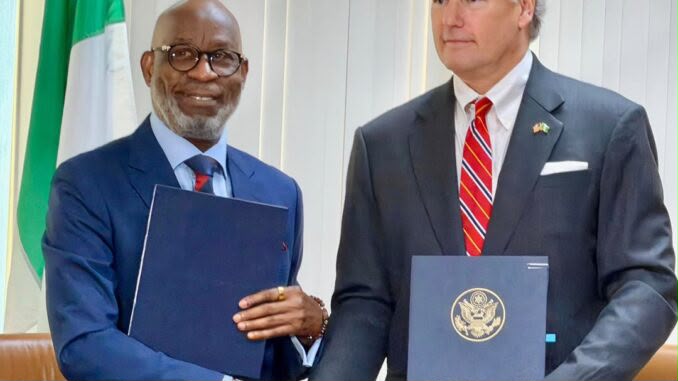
The United Nations General Assembly dominated the macro picture this week, with Iran diplomacy providing the most significant geopolitical signal since the Versailles MoU in June. Trump indicated he was open to meeting Iranian President Pezeshkian on the UNGA sidelines — and oil fell more than 9% over four sessions on the diplomatic signal, its sharpest weekly decline since the conflict began. Gold remained volatile in the $4,280 to $4,413 range as Iran diplomacy pulled it in one direction while hawkish Fed commentary and strong US PMI data pulled it in the other. China's gold imports hit 1,000 tonnes in the first eight months of 2026 while the PBoC added 20 tonnes in August alone — the structural demand floor deepening as tactical uncertainty persists. On the Africa side, Nigeria and the United States signed a landmark $700 billion critical minerals framework agreement at UNGA on 24 September — covering geological data sharing, mineral exploration, processing infrastructure and technical capacity building. And Somalia's President Hassan Sheikh Mohamud made the first presidential-level public confirmation of uranium, lithium and cobalt deposits within Somalia's borders, formally opening Africa's most underexplored major jurisdiction to international mining investment.
| Currency | Range (vs USD) | Trend |
|---|---|---|
| NGN — Nigerian Naira | ~1,610 – 1,670 | Firming; US-Nigeria $700bn critical minerals framework signed at UNGA |
| ZAR — South African Rand | ~17.8 – 18.6 | Recovering; gold holding above $4,300 despite Fed hawkishness |
| ZWL — Zimbabwean Dollar | ~13.1 – 13.7 | Stable; lithium revenues underpinning reserves |
| ZMW — Zambian Kwacha | ~24.5 – 25.5 | Broadly stable; copper above $13,500 supportive |
| EUR — Euro | ~1.07 – 1.11 | Volatile; dollar at two-month highs on strong PMI then softened |
| GBP — British Pound | ~1.30 – 1.34 | Broadly stable |
Oil falling 9% over four sessions provided the most significant input cost relief for African economies since the Versailles MoU partial reprieve in June. The naira firming on the US-Nigeria framework signing reflects genuine capital market confidence in the agreement's potential to unlock DFI-backed project flows. Dollar at two-month highs mid-week on strong PMI then softened as Iran diplomacy shifted risk appetite. Sources: LME, ICE, Refinitiv, CME, Fastmarkets.
Iran diplomacy at UNGA — oil falls 9% in four sessions. Trump indicated openness to meeting Iranian President Pezeshkian on UNGA sidelines. Oil lost more than 9% over four sessions — its sharpest weekly decline since the conflict began in February. Iran's President maintained a firm stance on Hormuz. The diplomatic signal is real. The resolution is not yet.
Fed officials signal more hikes possible. Chicago Fed's Goolsbee warned that persistent supply shocks could require a policy response. St. Louis Fed's Musalem said further hikes may be needed. September PMI data showed US business activity at its fastest pace in more than five years.
China gold demand accelerating. Chinese gold imports hit 1,000 tonnes in the first eight months of 2026. The PBoC added 20 tonnes in August. Chinese gold ETFs added approximately 44 tonnes in August — three separate buyer categories all accelerating simultaneously.
Ghana Tarkwa — still no response, nine months. No Minerals Commission response to Gold Fields' renewal application. Parliamentary submission of the new mining law still pending. April 2027 is now six months away.
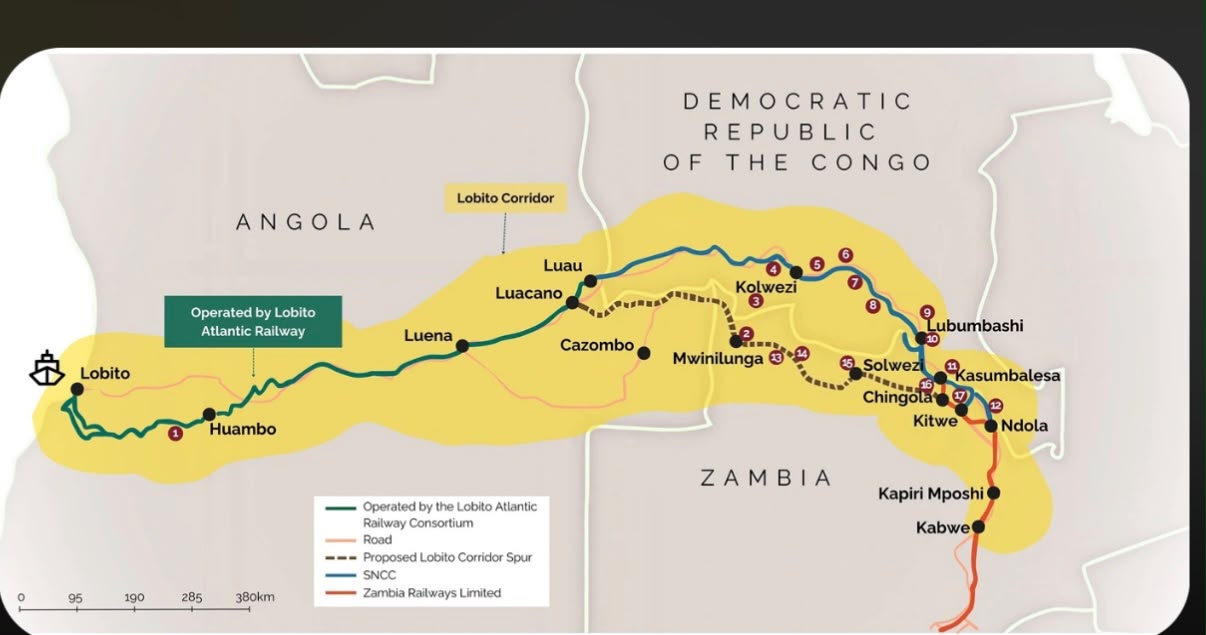
USTDA signs Lobito Corridor power agreement. The US Trade and Development Agency signed an agreement with Anzana Electric Group to fund a feasibility study for expanded hydropower and upgraded power infrastructure along the Lobito Corridor. Harmony also issued a $500 million bond this week, optimising its funding profile following its record R100bn revenue year.
Two stories this week sit at opposite ends of the same strategic question — how international capital finds its way to Africa's mineral endowment. Nigeria's $700 billion critical minerals framework with the US, signed at UNGA, is the most advanced expression of the Western engagement model tracked all year — a government-to-government foundation explicitly designed to counter Chinese financing of Nigeria's newer lithium and solid minerals infrastructure. The US named Glencore founding partner of VaultCo, its strategic critical minerals reserve, the same week — capital deployment following the framework-level commitments. Somalia's presidential confirmation of uranium, lithium and cobalt deposits is a different kind of signal: an opening bid for investment in Africa's most underexplored major jurisdiction, with no grade data or feasibility work behind it yet. Against this, China's gold imports hitting 1,000 tonnes in eight months confirm the structural demand floor is deepening even as Iran diplomacy and hawkish Fed commentary pull gold in opposite tactical directions — and Ghana's central bank pausing its own Gold for Reserves programme to defend FX reserves shows that sovereign participation ambitions carry real implementation risk alongside the policy risk facing foreign operators.
The race for African minerals just got bigger. Nigeria's $700 billion framework with the US and Somalia's presidential confirmation of uranium, lithium and cobalt sit at opposite ends of the same question — how international capital finds its way to Africa's mineral endowment — and both point toward the same structural signal alongside Glencore's VaultCo role: the world needs what Africa has, and African governments and Western governments alike now know it. Ghana's gold export pause is the reminder that turning that leverage into durable institutional capacity is a separate and harder problem than signing the framework.
Two stories this week — Somalia's uranium, lithium and cobalt confirmation and Nigeria's $700 billion framework with the United States — sit at opposite ends of the same strategic question. How does international capital find its way to Africa's mineral endowment? And which relationships structure that access? Nigeria's framework with the US is the most advanced expression of the Western model this newsletter has been tracking all year. Government-to-government foundation. Business-to-business transactions to follow. DFI financing pathways and US EXIM Bank involvement expected. Nigeria's $700 billion mineral resource estimate is significant — but the number that matters more is the competitive context. Chinese firms already finance most of Nigeria's newer lithium and solid minerals processing infrastructure. The US framework is Washington acknowledging that competition directly and choosing to engage rather than cede the ground. Somalia is a different kind of story. Not a framework agreement with a committed counterparty. A presidential announcement of geological potential in a jurisdiction that has had almost no formal mining investment for decades. The gap between announcing mineral potential and having a bankable project is measured in years and hundreds of millions of dollars of exploration spending. But the announcement matters because of what it signals about direction. Every African country that has recently moved to formally assert its mineral endowment — Ghana, Guinea, the DRC, Zimbabwe, Tanzania, Somalia this week — is responding to the same structural signal: the world needs what Africa has, and African governments know it. The map of African critical mineral engagement is expanding every month. For AEMBank, operating at the intersection of African sovereign mineral policy and international development finance, this week's UNGA developments are the most direct available signal of where the capital flows are heading.
Three themes stand out this week. The Nigeria-US framework, though non-binding, is the most directly relevant development of the year for AEMBank's home jurisdiction mandate — the geological data sharing and processing infrastructure components are natural co-financing points once DFI and US EXIM Bank pathways firm up, and AEMBank should position early to identify projects alongside rather than after US engagement. Somalia's opening signal is a multi-year exploration-stage opportunity rather than a near-term financing one — worth tracking for eventual first-mover positioning once geological survey and legislative groundwork advances, but not yet bankable. And Ghana's gold export pause is a direct data point for sovereign-risk pricing across the AEMBank pipeline: a government's mineral policy ambition can outrun its fiscal capacity to implement it, and that gap — not just headline policy changes like royalty increases — is what financing structures need to price.
The Federal Reserve raised interest rates by 25 basis points to 3.75-4.00% on Wednesday 16 September — its first rate hike since July 2023 and the most anticipated monetary policy decision of the year. In a unanimous vote, the FOMC moved rates higher, with 16 of 18 officials signalling support for further tightening. Gold's reaction defied the conventional playbook — surging 2.5% to $4,368 on the day as Treasury yields reversed after the initial spike, oil fell 4%, and real yields moved in gold's favour rather than against it. ETF investors had added $2 billion to gold funds in the five sessions before the hike, treating the decision as already priced in. Gold mining equities corrected 35-40% from their 2026 highs over the period of hike uncertainty, creating a divergence between physical gold and equity performance that makes the allocation decision consequential. Sibanye-Stillwater reported record H1 revenue of R90 billion — up 64% — with headline EPS up 216% to R6.01 and a cash dividend of $0.499 per share. The DRC's mining code reform is advancing toward a parliamentary vote. Gold Fields confirmed its Tarkwa renewal application has been unanswered for nine months with April 2027 six months away. And copper hit an all-time high of $14,779 per tonne on the London Metal Exchange this week.
| Currency | Range (vs USD) | Trend |
|---|---|---|
| NGN — Nigerian Naira | ~1,610 – 1,670 | Broadly stable; oil easing marginally positive for import costs |
| ZAR — South African Rand | ~17.8 – 18.8 | Volatile week; gold resilience post-hike partially supportive |
| ZWL — Zimbabwean Dollar | ~13.1 – 13.7 | Stable; lithium revenues underpinning reserves |
| ZMW — Zambian Kwacha | ~24.5 – 25.5 | Broadly stable; copper firming supportive |
| EUR — Euro | ~1.07 – 1.11 | Recovering; dollar softened post-Fed as real yields fell |
| GBP — British Pound | ~1.30 – 1.34 | Broadly stable |
The dollar strengthened into the Fed decision then softened after as real yields fell on the Treasury reversal — providing unexpected relief to emerging market currencies including the rand and kwacha. Oil falling 4% on Fed day was a secondary positive signal for African economies with significant energy import bills. Sources: LME, ICE, Refinitiv, CME, Fastmarkets.
Fed hiked 25bp — unanimously — first time in three years. The FOMC raised the federal funds rate to 3.75-4.00% in a unanimous 12-0 vote on Wednesday 16 September. Sixteen of 18 officials signalled support for further tightening. The median dot plot now shows a year-end rate of 4.1%, up from 3.8% — indicating one more hike is expected before year-end. Gold surged 2.5% on the day.
August CPI — came in at 3.4%, in line with July. The CPI print on 11 September was not the upside shock that PPI had suggested. Core inflation held at 2.5% annually. The relatively contained CPI meant the hike was already fully priced by Wednesday — removing the element of surprise that typically drives sharp gold selloffs on rate decisions.
Ghana Tarkwa — nine months, still no response. Gold Fields has received no answer from Ghana's Minerals Commission. April 2027 is six months away. Analysts continue to describe the company as unfairly penalised.
DRC mining code — advancing toward parliamentary vote. The bill continues to progress through the legislative process. No vote date confirmed but momentum is building.
Copper — all-time high of $14,779 per tonne on the LME. The record came this week driven by supply tightness, anticipated US tariffs pulling metal into American warehouses, and structural energy transition demand. Smelter treatment charges at zero — the lowest on record.
The question underneath every edition of this newsletter since August — what happens to gold when the Fed actually hikes? — was answered on Wednesday: gold surged 2.5% on the day of a unanimous 25-basis-point rate increase. The reason is structural rather than tactical. Gold's price is now primarily determined by a demand base — central banks buying for twenty-two consecutive months, record ETF inflows, sovereign reallocation away from US Treasuries — that is not rate-sensitive in the way retail and speculative investors are. For African mining finance the implication is direct: the extraordinary earnings of 2026, documented across eight consecutive results, were built on a gold price above $4,000, and Wednesday's answer is the most constructive available on whether that environment is durable. Sibanye's record R90 billion H1 revenue and Mount Lyell copper approval show that supercycle cash flow is being reinvested for the long term, while copper's all-time high of $14,779 per tonne — with smelter treatment charges at zero — is repricing African copper assets at Kamoa-Kakula, Lumwana and Mingomba. Against this, Ghana's unanswered Tarkwa renewal, six months from the April 2027 lease expiry, and the DRC's advancing mining code remain the clearest signals of where sovereign participation is heading.
Gold just passed its biggest test of the year. It surged 2.5% on the day of the Fed's first rate hike in three years, because its price is now driven by a structural demand base — central banks, record ETF inflows, sovereign reallocation — that is not rate-sensitive in the way speculative positioning is. For African mining finance, the earnings documented across eight consecutive results now have the most constructive available evidence that the price environment behind them is durable. The dot plot's signal of one more hike before year-end is the next variable, but oil at $87 and CPI at 3.4% both argue against a second move.
The question that has been sitting underneath every edition of this newsletter since August is now answered. What happens to gold when the Fed actually hikes? The answer arrived Wednesday. Gold surged 2.5% on the day of a unanimous 25-basis-point rate increase. The conventional playbook — higher rates make gold less attractive, gold falls — did not play out. The reason is structural rather than tactical. The conventional playbook assumes that gold is priced primarily as a rate-sensitive asset competing with bonds for yield. That assumption held through most of the 2022-2024 tightening cycle. It does not hold in 2026. Gold's price is now primarily determined by a structural demand base — central banks buying for twenty-two consecutive months, global ETF inflows at record pace, sovereign wealth funds reallocating away from US Treasuries — that is not rate-sensitive in the same way retail and speculative investors are. When the Fed hiked on Wednesday, the structural buyers did not sell. The tactical shorts who had positioned for a hike-driven selloff covered their positions. Gold rose. For African mining finance the implications are direct. The extraordinary earnings of 2026 were built on a gold price above $4,000. Those earnings are now documented across eight consecutive results. The question heading into Q4 is whether the price environment that enabled them is durable. Wednesday's answer is the most constructive available. The dot plot's signal of one more hike before year-end is the next variable. November and December are the remaining FOMC meetings. A second hike would lift real yields further and test the structural floor again. The August CPI at 3.4% and the fact that oil has fallen from above $100 to near $87 both argue that the inflation picture is improving — which reduces the probability of a second hike even as the dot plot signals it. J.P. Morgan's $6,000 year-end target and Goldman's more cautious view represent the range of outcomes. The structural case for African gold production sits above both.
Three themes stand out this week. Gold's ability to rise on the day of the Fed's first hike in three years supports treating the structural demand base — not the rate cycle — as the primary driver when underwriting gold-linked financing, though the 35-40% correction in gold mining equities against gold's own 22% drawdown is a reminder that equity-linked instruments carry materially more rate risk than physical-price-linked ones, a distinction worth reflecting in how AEMBank structures instruments across the pipeline. Copper's all-time high alongside zero smelter treatment charges signals that mine supply — not processing capacity — is the binding constraint, strengthening the case for financing new African concentrate production and the logistics corridors that serve it. And the Tarkwa renewal delay, now six months from lease expiry, should be tracked as a live input to sovereign-participation risk pricing on any Ghana-exposed gold financing.
A difficult week for gold as two inflationary signals arrived simultaneously. August PPI came in at 5.4% annually on Thursday — the highest reading of the year — while Brent crude crossed $100 again as US-Iran strikes resumed, pushing September Fed rate-hike probability from 60% to 70% in a single session. August jobs growth surged well above expectations earlier in the week, adding further pressure. Gold traded near $4,349 on Thursday before August CPI — the last major input before the September 15-16 FOMC meeting — landed today, Friday 11 September. Against this backdrop, African Rainbow Minerals reported a twelve-fold increase in annual profit to R4 billion — completing the eight-result African mining earnings supercycle. China's People's Bank added 650,000 troy ounces in July — its twentieth consecutive month of purchases. Gold ETFs recorded $18 billion in August inflows — the second largest monthly inflow on record — confirming both official and private buyers are moving in the same direction simultaneously. South Africa's mining production fell 7.5% in July, its largest decline this year. Fortuna Mining approved a $109 million, 30% capacity expansion of its Séguéla gold mine in Côte d'Ivoire. And the DRC's mining code reform is advancing toward a parliamentary vote.
| Currency | Range (vs USD) | Trend |
|---|---|---|
| NGN — Nigerian Naira | ~1,615 – 1,675 | Stable; oil above $100 negative but NNPC listing sentiment positive |
| ZAR — South African Rand | ~18.0 – 19.0 | Weakening; gold below $4,400 and production decline compounding |
| ZWL — Zimbabwean Dollar | ~13.2 – 13.8 | Stable; lithium revenues underpinning reserves |
| ZMW — Zambian Kwacha | ~24.8 – 25.8 | Broadly stable; copper firming supportive |
| EUR — Euro | ~1.07 – 1.10 | Softening; ECB hiked this week; dollar stronger on hot data |
| GBP — British Pound | ~1.30 – 1.33 | Broadly stable |
The ECB delivered an expected rate hike this week and warned that inflation risks remain tilted to the upside — the same oil-driven inflation dynamic running through the Fed is running through European monetary policy simultaneously. Dollar strengthening on hot US data is weighing on African currencies. ZAR under particular pressure as gold below $4,400 compounds with the July production decline. Sources: LME, ICE, Refinitiv, CME, Fastmarkets.
August CPI — lands today, Friday 11 September. This is the publication date of this newsletter. The CPI result will be known before close of business. At or below 3.4% keeps the hold case alive. Above 3.5% makes September near-certain. The result determines the opening position of the September 15-16 FOMC meeting.
August jobs — surged above expectations. Non-Farm Payrolls came in well above the consensus forecast earlier this week, giving the three FOMC dissenters who voted for an immediate hike in July fresh ammunition. Combined with the PPI miss on Thursday, the data picture heading into September is the most hawkish of the year.
ECB hiked rates this week. The European Central Bank delivered a rate increase and warned that inflation risks remain tilted to the upside. Both the Fed and the ECB are now in active tightening mode simultaneously — the first time since early 2026.
Ghana Tarkwa renewal — unanswered nine months. Gold Fields confirmed it has received no response to its November 2025 renewal application. Analysts cited by Miningmx say the company is being unfairly penalised for regulatory struggles. April 2027 is six months away.
Electra Mining Africa — ran this week in Johannesburg. Africa's largest mining exhibition, 7-11 September at the Johannesburg Expo Centre in Nasrec. Mining Weekly reported Italian companies targeting South African partnerships, AI reducing tyre downtime by up to 20% and significant technology showcases at the event.
African Rainbow Minerals' twelve-fold profit increase to R4 billion completes the eighth and final result in the African precious metals and diversified mining earnings supercycle tracked since April 2026: AngloGold up 58%, Glencore up 86%, DRDGold up 85%, Wheaton record revenue, Sibanye up 111%, Harmony up 87%, Implats R22 billion free cash, and now ARM up twelve-fold — with Pan African Resources separately flagging earnings per share up 141 to 151%, confirming the supercycle extends across mid-tier producers too. But the tactical backdrop turned sharply hawkish this week: hot PPI, strong jobs and oil back above $100 pushed September hike probability to 70% and gold down to $4,349. The structural picture underneath is more constructive — China's PBoC buying for a twentieth consecutive month and gold ETFs recording their second largest monthly inflow on record show official and private buyers converging simultaneously. South Africa's mining production fell 7.5% in July, the largest decline this year, even as Fortuna Mining committed $109 million to expand its Séguéla mine in Côte d'Ivoire — a sign that capital is still backing production growth in stable West African jurisdictions even as output falls in South Africa and sovereign tightening advances in the DRC.
Eight results in eight weeks completes the African precious metals and diversified mining earnings supercycle across every major South African and pan-African producer. This week's hawkish data run — hot PPI, strong jobs, oil back above $100 — compresses gold's near-term ceiling ahead of next week's FOMC meeting, but the structural floor is unchanged: China's PBoC buying for twenty consecutive months and record ETF inflows show official and private capital converging at the same time. South Africa's 7.5% production decline is the clearest signal yet of what the sector's operating leverage has been masking — and Fortuna's $109 million Séguéla expansion shows where new production capital is actually flowing while that question remains unresolved.
The 2026 African precious metals earnings supercycle is now complete and documented across eight consecutive extraordinary results. Every major South African and pan-African producer. Historically significant earnings driven by elevated gold and PGM prices. The numbers are a matter of confirmed record. This week South Africa's mining production fell 7.5% in July — the largest monthly decline of the year — with PGMs the biggest contributor. The sector earning extraordinary revenues on declining production volumes is what operating leverage looks like when it is working in your favour. Revenue up 34% at Harmony on 1.43 million ounces that met guidance. DRDGold revenue up 42% on essentially unchanged volumes. The price is doing the work that production growth would otherwise do. But production declining while prices are elevated raises a direct question: what does the sector's financial performance look like when prices normalise? The structural demand answer is more constructive than the tactical picture suggests. China's PBoC is buying for twenty consecutive months. Gold ETFs just recorded their second largest monthly inflow on record. Central banks globally bought a quarterly record in Q2. Goldman Sachs maintains a year-end target above $4,900. UBS describes the risk-reward into year-end as skewed higher. The structural case is intact. A September rate hike — if it comes — compresses the near-term ceiling. It does not change the structural floor. The Fortuna Séguéla expansion is the most constructive production story of the week — a $109 million investment in West Africa's fastest-growing gold jurisdiction, funded from operating cash flow, delivering more than 200,000 ounces per year for a decade. The production question for African mining is not unanswerable. It is being answered, one jurisdiction at a time, by companies making the bet that the structural demand for African gold is real and durable.
Three themes stand out this week. South Africa's 7.5% production decline alongside eight consecutive record earnings results confirms that price, not volume, has been carrying the sector's financial performance — a structural risk worth stress-testing into any financing that assumes current margins persist once prices normalise or production recovers. Fortuna's $109 million Séguéla expansion, funded entirely from operating cash flow in a stable regulatory jurisdiction, is a useful benchmark for the kind of production-growth financing AEMBank should be competing to originate in Côte d'Ivoire and comparable West African jurisdictions, rather than ceding to internally funded expansion. And the DRC mining code's advance toward a parliamentary vote — with permit suspension powers opposed by the Chamber of Mines — should be tracked as a direct input into the risk pricing of any DRC-exposed cobalt or copper financing in the pipeline.
Gold recovered from last week's Warsh-driven selloff to trade near $4,470 on Friday as Fed Governor Waller tempered rate-hike expectations and August's ADP private employment data came in at just 38,000 — the weakest since January and well below the 47,000 forecast. The August Non-Farm Payrolls report lands Friday and is the decisive input before the September 15-16 FOMC meeting. Markets are pricing a 66% chance of a hike following Warsh's Jackson Hole speech, but Waller's comments are pulling that back. Impala Platinum generated R22 billion in free cash and returned a record R17 billion to shareholders, with CEO Nico Muller announcing a new-phase R60 billion capital expenditure programme — the seventh consecutive extraordinary South African precious metals earnings result. Sibanye-Stillwater confirmed earnings up 111% with an R5.7 billion dividend declared, and approved its first copper project — Mount Lyell in Australia. Zambia's state-controlled mining investor announced it expects to unlock more than $1.8 billion from the country's small-scale gold industry by adopting Ghana's formalisation model. Ionic Rare Earths secured a term sheet for a magnet recycling joint venture in the US with Missouri-based US Strategic Metals. And Valterra Platinum's Unki mine in Zimbabwe completed the first-ever renewal audit in IRMA's history — a governance milestone in one of Africa's most complex mining regulatory environments.
| Currency | Range (vs USD) | Trend |
|---|---|---|
| NGN — Nigerian Naira | ~1,610 – 1,670 | Broadly stable; oil easing a marginal import cost relief |
| ZAR — South African Rand | ~15.99 – 18.6 | Firming; gold recovery and PGM earnings supercycle both supportive |
| ZWL — Zimbabwean Dollar | ~13.1 – 13.7 | Stable; Valterra Unki IRMA audit a governance confidence signal |
| ZMW — Zambian Kwacha | ~24.5 – 25.5 | Firming; $1.8bn small-scale gold formalisation target positive |
| EUR — Euro | ~1.08 – 1.12 | Firmer; dollar softening on Waller comments |
| GBP — British Pound | ~1.31 – 1.35 | Broadly stable |
The dollar softened after Waller's comments and the weak ADP data — providing relief to African currencies that had been under pressure since Warsh's Jackson Hole speech. ZAR at its best level since the Iran war began, supported by gold recovery and the PGM earnings supercycle. The R/$ moved to 15.99 at the Mining Weekly ticker — the most positive South African currency signal of the year. Sources: LME, ICE, Refinitiv, CME, Fastmarkets.
August Jobs Report — lands today, Friday 4 September. ADP came in at 38,000 — the weakest since January — pointing toward a weak official payrolls number. A reading below 100,000 would significantly reduce the September hike probability and push gold above $4,500. A strong number above 200,000 cements the hike case.
Gold recovering from Warsh selloff. Gold stabilised at $4,330 mid-week before climbing to $4,470 on Friday after Waller's comments. August's total return is still positive — gold up approximately 10% for the month even after the Jackson Hole selloff.
Iran — Trump says strikes short-lived, oil easing. Trump indicated this week that the latest attacks on Iran would be short-lived while confirming the US stands ready for further strikes if needed. Oil eased off recent highs on the comment. Brent trading near $83 to $96 — still elevated but directionally lower.
Ghana Tarkwa renewal — still no response after nine months. Gold Fields' November 2025 renewal application remains unanswered. The April 2027 lease expiry is now seven months away.
Wheaton Kurmuk first gold — still imminent. No formal announcement yet. Watch for the pour confirmation which triggers Wheaton's stream revenue.
Implats' R22 billion free cash generation and R60 billion new capex programme — the seventh consecutive extraordinary result in the African precious metals earnings supercycle tracked across this newsletter since April 2026 — signals that producers are treating current prices as a durable platform for long-term investment rather than a temporary windfall. Sibanye's 111% earnings jump and R5.7 billion dividend arrived alongside approval of its first copper project, Mount Lyell in Australia, diversifying the company into the critical mineral with the most consistent structural demand signal across the energy transition. Zambia's $1.8 billion small-scale gold formalisation target — explicitly modelled on Ghana's Gold Board — is the clearest available quantification yet of the gap between the formal sector's extraordinary earnings and the informal sector's currently untaxed, untraceable production. Ionic Rare Earths' US magnet recycling joint venture completes an African-to-American rare earth supply chain from Uganda to Missouri, while Valterra Platinum's Unki mine became the first in IRMA's history to complete a renewal audit — a governance milestone inside one of Africa's most complex regulatory environments. Against this backdrop, gold's recovery to $4,470 on Waller's dovish tone and a weak ADP print sets up today's August Non-Farm Payrolls report as the decisive input before the September FOMC meeting.
Seven results in seven weeks completes the African precious metals earnings supercycle across every major South African and pan-African producer. But this week also put a number on the other side of the story: Zambia's $1.8 billion small-scale gold formalisation target quantifies the gap between the formal sector's extraordinary earnings and an informal sector that currently generates deaths and smuggled production rather than tax revenue. Ghana's Gold Board, Dynacor's Senegal plant, the WGC's assurance standard and now Zambia's explicit adoption of the Ghana model are the operational structures beginning to close that gap — alongside Valterra's Unki IRMA audit, which shows governance infrastructure being built in exactly the jurisdiction where it is hardest to build it.
The African precious metals earnings supercycle reached seven consecutive extraordinary results this week. AngloGold up 58%. Glencore up 86%. DRDGold up 85%. Wheaton record revenue. Sibanye up 111%. Harmony up 87%. Implats R22 billion free cash. Every major category of South African and pan-African precious metals producer has delivered a record or near-record result in the same financial year. The numbers are now a matter of documented fact, not expectation. And this week Zambia put a number on a different kind of opportunity. $1.8 billion from formalising the small-scale gold sector — using the same model Ghana has been building. That number sits alongside the extraordinary formal sector earnings in a way that makes the contrast visible and quantifiable. The formal sector has generated billions in earnings this year. The informal sector — 20 million people across the continent — has generated thousands of deaths and billions of dollars in smuggled production that reaches no tax authority and no government revenue account. The formalisation infrastructure is being built. Ghana's Gold Board. Dynacor's processing plant in Senegal. The World Gold Council's assurance standard. Zambia's explicit adoption of the Ghana model. These are operational structures beginning to create formal pathways that currently do not exist for the 20 million people in the artisanal sector. Valterra Platinum's Unki mine completing the first-ever IRMA renewal audit in Zimbabwe this week is a different expression of the same underlying theme — governance infrastructure being built in exactly the environment where it is hardest to build it. Seven results. Seven weeks. The earnings are real and documented. The question is whether the governance, formalisation and responsible mining infrastructure being built in parallel with those earnings is moving fast enough to match them.
Three themes stand out this week. Implats' R60 billion capex commitment and Sibanye's Mount Lyell approval both signal that the region's largest PGM producers are deploying supercycle cash flow into long-dated capital programmes rather than distributions alone — a reference point for structuring AEMBank financing alongside rather than in competition with producer-funded expansion. Zambia's $1.8 billion formalisation target, built explicitly on Ghana's Gold Board model, is a directly replicable structure for AEMBank member states seeking to convert artisanal gold production into a formal, taxable revenue base — worth tracking for early-stage advisory or blended-finance engagement as implementation detail emerges. And the Ionic Rare Earths Uganda-to-Missouri supply chain, alongside Valterra's Unki IRMA audit in Zimbabwe, both illustrate that governance and downstream processing infrastructure — not just resource extraction — are now bankable components of the African critical minerals financing case.
The week that began with gold touching a three-month high of $4,700 ended with a sharp reversal. Fed Chair Kevin Warsh's Jackson Hole speech on Friday morning shocked financial markets by delivering a hawkish message on inflation — vowing to return PCE inflation to the Fed's 2% target and suggesting that recent soft data prints do not indicate meaningful underlying improvement. Gold fell more than 3% inside ten minutes, settling near $4,460. September rate-hike probability moved from below 40% to above 50%. Earlier in the week gold had been lifted by the US Treasury's announcement of support for long-duration bonds and ongoing central bank buying — making the Friday reversal particularly sharp. Against this macro backdrop, Harmony Gold reported its record year: revenue up 34% to R100 billion, headline earnings up 87%, operating free cash flow up 54% to R17 billion, and a record annual dividend of R12.80 per share — all on production of 1.43 million ounces that met guidance for the eleventh consecutive year. South32 more than doubled operating profit from continuing operations, declaring a 5.4 US cent final dividend. Gold Fields confirmed its Tarkwa renewal application has been with Ghana's Minerals Commission since November 2025 and is still awaiting approval — the most concrete signal yet of where the Ghana sovereign participation story stands. And copper had a strong week on its own structural merits — a Mining.com analysis piece made the case that copper's current moment may be a long one.
| Currency | Range (vs USD) | Trend |
|---|---|---|
| NGN — Nigerian Naira | ~1,615 – 1,675 | Broadly stable |
| ZAR — South African Rand | ~17.8 – 18.6 | Volatile; gold swing from $4,700 to $4,460 in one session |
| ZWL — Zimbabwean Dollar | ~13.1 – 13.7 | Stable; lithium revenues underpinning reserves |
| ZMW — Zambian Kwacha | ~24.5 – 25.5 | Firming; Hichilema second term continuity signal positive |
| EUR — Euro | ~1.07 – 1.10 | Softening; dollar stronger post-Warsh |
| GBP — British Pound | ~1.30 – 1.33 | Broadly stable |
The dollar strengthened materially after Warsh's speech — the US Dollar Index rose sharply on Friday as markets repriced the rate path. ZAR volatile on the gold swing. Zambian kwacha firming on Hichilema's re-election continuity signal. Sources: LME, ICE, Refinitiv, CME, Fastmarkets.
Jackson Hole — Warsh delivered a hawkish surprise. Gold hit $4,700 Tuesday before falling more than 3% on Friday after Warsh's speech. September hike probability moved from below 40% to above 50%. The August Jobs Report is due next Friday — the next decisive input before the September 15-16 FOMC meeting.
Ghana mining law — Gold Fields Tarkwa renewal waiting nine months. Gold Fields confirmed this week that its November 2025 renewal application is still with the Minerals Commission without a decision. The Tarkwa lease expires April 2027. The application and the new mining law are now both in play simultaneously.
Wheaton — Kurmuk first gold imminent. No formal announcement yet but the company confirmed first gold pour is expected within weeks of the August startup. Watch for the announcement which triggers Wheaton's stream revenue from the project.
CAR mine collapse — investigation ongoing. Authorities have closed the site. No broader regulatory announcement from CAR or regional bodies yet.
Iran — pause holding, dollar strengthening. No new strikes reported. Warsh's hawkish speech strengthened the dollar which adds a new headwind to oil price recovery — a stronger dollar makes dollar-denominated oil more expensive for non-dollar buyers, typically suppressing demand.
Harmony Gold's record year — revenue up 34% to R100 billion, earnings up 87%, free cash flow up 54% to R17 billion — is the sixth in a sequence of extraordinary African precious metals results tracked across this newsletter in 2026: AngloGold up 58%, Glencore up 86%, DRDGold up 85%, Wheaton record revenue, Sibanye up 371%, and now Harmony up 87%. Every major category of African gold producer has delivered a record or near-record result in the same financial year. South32's more-than-doubled operating profit confirms its post-Hillside portfolio — anchored by South African manganese, where the country holds roughly 80% of the world's known high-grade reserves — is performing strongly. But Warsh's hawkish Jackson Hole speech reset the macro backdrop that enabled these results: gold fell from a three-month high of $4,700 to $4,460 in a single session as September hike probability moved above 50%. And the Gold Fields Tarkwa story — a nine-month unanswered renewal application on Africa's largest foreign-operated gold mine, with the April 2027 lease expiry eight months away — sits alongside the Damang precedent and the new mining law as the clearest available signal of where Ghana's sovereign participation story is heading.
Six results in six weeks completes the African mining earnings supercycle across every major producer category. Warsh's speech does not reverse the structural drivers behind it — central banks are still buying, the energy transition still needs cobalt, lithium and copper, and Western governments still treat African mineral supply as a national security priority. What changed is the rate ceiling above gold — but based on the cost structures across six earnings results, the margins are wide enough to absorb a rate-driven correction. The more important question is Gold Fields' Tarkwa story: a nine-month unanswered renewal application is the clearest signal yet of where sovereign participation is heading.
The African mining earnings supercycle is now complete across six consecutive results. AngloGold up 58%. Glencore up 86%. DRDGold up 85%. Wheaton record revenue. Sibanye up 371%. Harmony up 87%. Every major category of African precious metals and diversified mineral producer has delivered a record or near-record year in 2026. The question now is what comes next — and Warsh's Jackson Hole speech this week provides the most direct available answer. The extraordinary earnings of 2026 were enabled by a specific macro environment: gold above $4,000 sustained by central bank buying and geopolitical risk; oil elevated by the Iran war creating an inflation premium that kept rate expectations high without tipping into a full tightening cycle; and the structural repricing of African minerals as strategic assets by Western governments. Warsh's speech does not reverse any of those structural drivers. What changed on Friday is the rate ceiling above gold. September hike probability is now above 50%. The question for African mining finance is whether the margin structure that enabled these extraordinary results can withstand a gold price that gives back some of August's gains. The answer, based on the cost structures visible across six earnings results, is almost certainly yes — at $4,200 or even $4,000 gold, every one of the six companies reporting this year remains highly profitable. The more important question is the Gold Fields Tarkwa story. A nine-month unanswered renewal application on Africa's largest foreign-operated gold mine, with April 2027 eight months away, is the clearest available signal of where the sovereign participation story is heading.
Three themes stand out this week. Harmony's record year — built on a diversified gold-and-copper base after the CSA acquisition — and South32's post-Hillside strength both confirm that portfolio diversification away from a single commodity or jurisdiction continues to outperform, a consideration worth weighting when structuring financing across the AEMBank pipeline. The margin analysis underlying six consecutive record results — remaining highly profitable even at $4,000 to $4,200 gold — supports stress-testing financing structures against a rate-driven pullback rather than treating current prices as a permanent floor. And the Gold Fields Tarkwa renewal, unanswered nine months into a process that historically moved faster, should be tracked as a leading indicator for sovereign participation risk across AEMBank's Ghana-exposed gold financing, alongside the Damang precedent and the pending mining law.
Gold is holding near $4,390 with five forces in play simultaneously: the Iran ceasefire has formally expired, FOMC minutes from the July meeting dropped Wednesday, Jackson Hole runs August 27-29 with Chair Warsh's first keynote address as Fed chair, central banks recorded their strongest quarterly gold buying on record in Q2 at 288.9 tonnes, and three consecutive soft data prints — jobs, CPI and PPI — have brought September hike probability to 31%. Wheaton Precious Metals reported record H1 revenue of $901 million. Sibanye-Stillwater reported H1 earnings up 371%. DRDGold confirmed full annual results with free cash flow up 85% to R2.3 billion and CEO Niël Pretorius saying simply: 'It's been a very good year.' At least 49 people were killed in an artisanal gold mine collapse in the Central African Republic — the third consecutive week of fatal artisanal mining incidents following Rustenburg last week and Samancor's tailings collapse. Ghana's mineworkers union petitioned the central bank for $34.5 million in frozen savings — a human cost story sitting directly alongside the government's mining law overhaul. And South Africa's government-business partnership selected mining as one of four sectors to raise national growth to 3%.
| Currency | Range (vs USD) | Trend |
|---|---|---|
| NGN — Nigerian Naira | ~1,620 – 1,680 | Firming; government-business 3% growth target includes mining |
| ZAR — South African Rand | ~17.6 – 18.3 | Strong; gold above $4,400 and Ramaphosa mining growth signal |
| ZWL — Zimbabwean Dollar | ~13.1 – 13.7 | Stable; lithium revenues and Sibanye earnings both positive |
| ZMW — Zambian Kwacha | ~24.5 – 25.5 | Firming; BHP copper dividend signal supportive |
| EUR — Euro | ~1.08 – 1.12 | Steady; dollar soft ahead of Jackson Hole |
| GBP — British Pound | ~1.31 – 1.35 | Broadly stable |
The dollar is soft ahead of Jackson Hole as markets wait for Warsh's first major speech as chair. African currencies broadly benefiting — ZAR at its strongest level of the year as gold above $4,400 combines with a constructive domestic policy signal from the government-business partnership. Sources: LME, ICE, Refinitiv, CME, Fastmarkets.
Jackson Hole — nine days away. The symposium runs August 27-29. Warsh speaks Friday morning August 28 — his first Jackson Hole address as Fed chair. Three soft data prints — July CPI at 3.4%, July PPI unchanged, retail sales down 0.6% — have reduced September hike probability to 31%. Warsh has said his remarks will focus on long-term structural questions. The decisive input remains August CPI releasing September 10 — five days before the FOMC meets.
DRDGold full results — confirmed August 19. Free cash flow up 85% to R2.3bn. CEO Niël Pretorius: 'It's been a very good year.' Full results confirm the trading statement from last week in every material respect.
Ghana mining law — still no parliamentary submission. Five weeks since cabinet approval. No formal submission date. Meanwhile Ghana's mineworkers union has petitioned the central bank for $34.5 million in frozen savings — a separate but connected human cost story within the same sector.
Rustenburg illegal mining — rescue complete. Final casualty count confirmed at 14. Department of Mineral Resources has ordered an investigation. No enforcement or closure announcements yet on surrounding informal operations.
Iran ceasefire — formally expired. The 60-day MoU window from Versailles has now formally elapsed. Any new agreement is a fresh negotiation. Doha talks continuing but oil retains a residual risk premium of $5 to $10 above pre-war levels.
Sibanye-Stillwater's 371% earnings jump. Wheaton's record $901 million H1 revenue. DRDGold's free cash flow up 85% to R2.3 billion. Three results in one week complete a run of five consecutive extraordinary African mining results — AngloGold, Glencore, DRDGold, Wheaton and now Sibanye — that together confirm the operating leverage thesis at every level of the value chain, from tailings retreatment to streaming to integrated PGM-gold-lithium producers. Sibanye's Capital Markets Day disclosure that gold overtook US Treasury bonds as the largest central bank reserve asset in 2025 — rising from 20% to 27% of global reserves — sits alongside the Q2 record of 288.9 tonnes of central bank buying as confirmation that this is a structural repricing, not a cyclical spike. South Africa's government-business partnership naming mining as one of four sectors to lift growth to 3% is the domestic policy expression of the same recognition. Wheaton's streaming exposure to Kurmuk in Ethiopia and Platreef in South Africa's Bushveld Complex means African production is now directly embedded in the earnings of the world's largest streaming company, not just its own operators.
The earnings supercycle is real, and it is now documented across every category of African mineral producer — precious, base and battery metals alike. But the same five weeks that produced these results also produced 14 deaths in Rustenburg, 49 in the Central African Republic and a mineworkers' union still waiting on $34.5 million owed since 2019. The value chain structures that would let this repricing reach the people closest to the minerals are being built — but slowly, relative to the pace at which the prices have moved.
Five results in five weeks. AngloGold up 58%. Glencore up 86%. DRDGold up 85%. Wheaton record revenue. Sibanye up 371%. The African mining earnings supercycle is now fully documented across every major category of precious and critical metal producer. The numbers are extraordinary by any historical measure. And in the same five weeks: 14 illegal miners killed in Rustenburg. 49 artisanal miners killed in the Central African Republic. A tailings collapse at Samancor. Ghana's mineworkers petitioning for $34.5 million in savings their government has not returned. These are not unrelated stories. They are the same story seen from different positions in the value chain. The earnings supercycle is real. It reflects a genuine structural repricing of African minerals as strategic assets rather than commodities. Central banks are buying gold at record quarterly volumes. Governments are asserting more control over their mineral endowments. The Western world is designating African mineral supply a national security priority. The question that sits underneath it is direct: how much of this repricing reaches the people closest to the minerals? The formalisation infrastructure — the World Gold Council's assurance standard, the Dynacor processing plant model, the beneficiation mandates that create formal sector employment — is being built. But it is being built slowly relative to the pace at which the commodity prices have moved.
Three themes stand out this week. Wheaton's streaming exposure to Kurmuk and Platreef is a live illustration of how upfront, fixed-price financing structures capture upside without operating risk — a model directly relevant to AEMBank's own project-finance instruments across gold and PGM assets nearing production. Sibanye's 371% earnings jump, built on a diversified base spanning SA gold, PGMs, US recycling and Finnish lithium, is a reminder that diversified balance sheets absorb commodity-specific shocks far better than single-asset producers — a consideration for how AEMBank structures exposure across its member-state pipeline. And the coexistence of record earnings with three consecutive fatal artisanal mining incidents strengthens the case for AEMBank to treat formalisation financing — processing infrastructure, safety equipment, traceability systems — as a distinct line item within the broader mining finance mandate rather than a peripheral concern.
Gold touched a 10-week high of $4,454.60 on Friday after July CPI came in at 3.4% annually and 0.1% month-on-month — in line with forecasts and enough to push September Fed hike probability from 52% to 36%, with markets now pricing a 64% chance of a hold. The dollar softened, treasury yields fell, and gold surged. Jackson Hole at the end of August is now the next decisive signal — Fed Chair Warsh's tone on inflation and the rate path there will set September expectations. DRDGold flagged full-year earnings up 85-95% on revenue of R11.16 billion — up 42% year on year — with production of 155,577 ounces beating guidance despite unchanged volumes, demonstrating the extraordinary operating leverage available at current gold prices. Fourteen illegal miners were killed in a mine dump collapse near Rustenburg as they dug for platinum group metals at a disused site — the artisanal and illegal mining story in its most tragic form, arriving in the same week that Dynacor and the World Gold Council announced a partnership to formalise the sector. Pensana, the Anglo-African rare earths company with the Longonjo project in Angola, attended a US Presidential briefing on rare earths supply. And the UN Economic Commission for Africa designated SADC as the continent's best-positioned testing ground for turning critical minerals into development — with demand for those minerals forecast to more than triple by 2030.
| Currency | Range (vs USD) | Trend |
|---|---|---|
| NGN — Nigerian Naira | ~1,625 – 1,685 | Firming; capital market sentiment positive following NNPC listing signal |
| ZAR — South African Rand | ~17.8 – 18.4 | Strong; gold above $4,400 most positive SA currency signal of the year |
| ZWL — Zimbabwean Dollar | ~13.2 – 13.8 | Stable; lithium revenues underpinning hard currency reserves |
| ZMW — Zambian Kwacha | ~24.8 – 25.8 | Broadly stable; copper firming supportive |
| EUR — Euro | ~1.08 – 1.12 | Firmer; dollar softening post-CPI |
| GBP — British Pound | ~1.31 – 1.35 | Broadly stable |
The dollar softened on Wednesday's CPI print — the US Dollar Index slipped 0.1% to 99.66 immediately after the release. Treasury yields fell. African currencies broadly benefiting with ZAR tracking gold above $4,400 for the most positive week of the year. Aluminium worth noting: LME stocks hit a 36-year low this week — the most concrete available measure of the Iran war's lasting impact on supply chains. Sources: LME, ICE, Refinitiv, CME, Fastmarkets.
August CPI — delivered, September hike probability collapses. July CPI at 3.4% annual, 0.1% monthly — in line with forecasts. September hold probability moved from 52% to 64% in a single session. The energy-driven inflation peak is washing through. Jackson Hole end of August is now the next decisive input.
Allied Gold — Zijin stake closed August 10. The $295 million strategic stake has closed. Allied Gold management confirmed proceeds are being deployed toward the Kurmuk development in Ethiopia. No further strategic announcements yet.
Ghana mining law — parliamentary submission still pending. No formal submission date confirmed. Cabinet approved the overhaul four weeks ago. The longer this takes the more operator uncertainty compounds.
Guinea Glencore bauxite offtake — commercial terms still undisclosed. The arrangement was announced without pricing, volume or duration details. Still the most significant African state-mining commercial structure to watch.
DRC equity framework — BMI: no material market impact expected. Fitch Solutions BMI published a specific assessment this week concluding the agreed framework will not materially disrupt copper or cobalt markets. Provides important reassurance alongside the ongoing implementation process.
DRDGold this week. AngloGold last week. Glencore the week before. Every significant African mining result in 2026 tells the same story: extraordinary revenue growth on largely unchanged production volumes, driven by commodity prices that have repriced African minerals from commercial commodities into strategic assets. DRDGold's result is the purest expression of this dynamic — revenue up 42% on production that was essentially flat, cash operating costs up only 8%, with the 34-percentage-point gap flowing entirely to earnings of 85% to 95%. The Pensana Presidential briefing and the UN ECA's SADC designation are institutional confirmations — from the US government and the UN simultaneously — that this repricing is structural rather than a temporary market condition. The Rustenburg collapse is the shadow side of the same story: fourteen people dead digging for PGMs in a disused mine dump because the formal sector's extraordinary margins have not yet translated into the formalisation infrastructure that would give artisanal miners a legal, safe and traceable pathway into the value chain.
Africa is naming its price. DRDGold's 85-95% earnings growth on essentially flat production, alongside institutional confirmations from the US government and the UN that African critical minerals are strategic assets, show a market willing to pay it. The Rustenburg tragedy is the reminder that the work remaining is ensuring the value reaches the people closest to the ground.
Four weeks into what this newsletter has called Africa's earnings supercycle, the picture is now clear enough to name directly. DRDGold this week. AngloGold last week. Glencore the week before. Every significant African mining result in 2026 tells the same story: extraordinary revenue growth on largely unchanged production volumes, driven by commodity prices that have repriced African minerals from commercial commodities into strategic assets. DRDGold's result is the purest expression of this dynamic. Revenue up 42% on production that was essentially flat. Cash operating costs up 8%. The difference — 34 percentage points of revenue growth above cost growth — flows entirely to earnings. Earnings up 85% to 95%. No new mines. No production breakthrough. Just the same ore processed at a gold price that has repriced everything. The Pensana Presidential briefing and the UN ECA SADC designation both sit in this context. They are institutional confirmations — from the US government and the UN simultaneously — that the repricing of African minerals is not a temporary market condition. It is a structural shift backed by the energy transition, supply chain decoupling, and national security frameworks across the world's largest economies. African governments are drawing the same conclusion from different angles. Guinea's Nimba Refinery. Zimbabwe's lithium sulphate plant. Ghana's local contractor mandate. Nigeria's NNPC listing intention. The Rustenburg collapse is the shadow side of the same story — fourteen people dead digging for PGMs in a disused mine dump because the formal sector's extraordinary margins have not yet translated into the formalisation infrastructure that would give artisanal miners a legal, safe and traceable pathway into the value chain. Africa is naming its price. The earnings confirm the market is willing to pay it. The work that remains is ensuring the value reaches the people closest to the ground.
DRDGold's result is the clearest financing signal of the week: an 85-95% earnings increase built entirely on cost discipline rather than production growth confirms that tailings-retreatment and similarly low-capex, cost-stable models capture gold price upside more efficiently than conventional underground or open-pit development — a structure worth weighting more heavily across AEMBank's gold-sector pipeline while prices remain elevated. Pensana's Presidential briefing attendance and the UN ECA's SADC designation both strengthen the case for treating rare earth and critical mineral projects as strategic rather than purely commercial financings, with blended and concessional structures likely to find a more receptive audience among Western government counterparts. And the Rustenburg deaths make the case directly: formalisation financing — processing capacity, safety equipment, traceability infrastructure of the kind Dynacor is building in Senegal — should be assessed as a parallel, not competing, use of capital alongside large-scale project finance.
Gold surged to $4,343 per ounce on Friday 7 August — its highest level in two months — as China's central bank reported its largest monthly gold purchase since October 2023 and institutional investors continued building gold-backed positions as a hedge against technology stock volatility. Gold miners surged more than 20% for the week in what Mining.com described as a breakout week, with junior miners and the TSX Venture posting outsized gains. AngloGold Ashanti reported Q2 headline earnings of $1.01 billion — up 58% year on year — driven by a 35% increase in the average gold price received, with free cash flow up 36% to $727 million and a $2 billion share buyback approved. Glencore reported H1 earnings up 86% to $10 billion. China's rare earth exports fell 10% through July as Beijing blacklisted 10 US companies in June and 14 EU firms in July, with the IEA warning that full enforcement could put $6.5 trillion of downstream production at risk. Guinea selected Glencore as offtaker for its state-owned bauxite miner. And Nigeria's President Tinubu committed to reforming and listing NNPC on the Nigerian Exchange — Africa's largest oil company on Africa's largest stock market.
| Currency | Range (vs USD) | Trend |
|---|---|---|
| NGN — Nigerian Naira | ~1,630 – 1,690 | Firming; NGX market cap N160trn; NNPC listing signal positive |
| ZAR — South African Rand | ~18.0 – 18.6 | Strong recovery; gold above $4,300 direct tailwind |
| ZWL — Zimbabwean Dollar | ~13.3 – 13.9 | Stable; lithium export revenues underpinning reserves |
| ZMW — Zambian Kwacha | ~25.0 – 26.0 | Broadly stable; copper firming supportive |
| EUR — Euro | ~1.07 – 1.11 | Steady |
| GBP — British Pound | ~1.30 – 1.34 | Broadly stable |
African currencies broadly benefiting from the gold recovery this week. ZAR tracking gold above $4,300 directly — a sustained move above this level would be the most positive South African currency signal since January. NGN firming on positive capital market sentiment following the NNPC listing announcement. Sources: LME, ICE, Refinitiv, CME, Fastmarkets.
Gold — breakout week confirmed. Gold at $4,343 on Friday, miners up 20%+. China's central bank added the most gold since October 2023 in July — a fifth consecutive month of purchases. The structural demand floor is not just intact, it is accelerating.
September Fed hike — August inflation data the key input. No new CPI or PCE data landed this week. The September decision window is still open. Oil remaining elevated around $96 to $102 is the primary upside risk to inflation. Watch for the August CPI release in the coming weeks.
Allied Gold — post-collapse positioning. The $295 million Zijin strategic stake closes around 10 August. Allied Gold management has confirmed the proceeds will be deployed toward Kurmuk development in Ethiopia. No asset sale announcements yet.
Iran — pause holding, Doha talks progressing. No major new strikes reported. Oil remains elevated at $96 to $102 on residual risk premium rather than active escalation. The 60-day MoU window has effectively expired — any new agreement is a fresh negotiation.
Ghana mining law — parliamentary submission still pending. No formal timeline confirmed. Newmont, AngloGold and Gold Fields operator responses still awaited.
AngloGold posted $1.01 billion in quarterly earnings. Glencore reported $10 billion for the half year. Gold miners surged 20% in a single week. These are not incremental results — they are the financial expression of a structural shift: African minerals are no longer priced as commodities in a buyer's market but as strategic assets in a seller's market. AngloGold is now capturing a margin exceeding $3,000 per ounce at an all-in sustaining cost of roughly $1,400 against a realised gold price of $4,446 — a year earlier at roughly $3,293 per ounce that margin was closer to $1,900. Glencore's trading book, combining mining and trading across coal, copper, cobalt, nickel, zinc and oil, captured value from the volatility itself as much as from elevated prices, with its DRC cobalt, Zambian copper and South African coal exposure all benefiting directly. Guinea's Glencore offtake deal and Nigeria's NNPC listing intention sit in the same context: African governments are not just watching these extraordinary earnings flow to foreign shareholders, they are restructuring who owns the production, who controls the offtake and where the value is listed.
Africa is naming its price. AngloGold's $3,000-per-ounce margin and Glencore's 86% earnings jump show what re-pricing looks like in practice once central bank buying, institutional hedging and geopolitical volatility become the dominant drivers rather than short-term macro noise — and Guinea's state offtake structure and Nigeria's NNPC listing intention show African governments moving to capture more of that value themselves rather than watching it flow entirely to foreign shareholders. The earnings results confirm there is a market willing to pay it.
AngloGold posted $1.01 billion in quarterly earnings. Glencore reported $10 billion for the half year. Gold miners surged 20% in a single week. These are not incremental results — they are the financial expression of a structural shift that has been building for years and accelerating in 2026. The shift is this: African minerals are no longer priced as commodities in a buyer's market. They are priced as strategic assets in a seller's market. The Iran war made energy supply a national security question. China's rare earth export controls made critical mineral supply a national security question. The green energy transition made lithium, cobalt and copper a national security question. Every major economy has now formally designated African mineral supply as strategically essential. The earnings results this week show what that re-pricing looks like in practice: AngloGold capturing a $3,000-per-ounce margin compared with $1,900 a year ago, and Glencore's trading book capturing value from the volatility that the geopolitical environment itself creates. Guinea's Glencore offtake deal and Nigeria's NNPC listing intention both sit in this same context — African governments restructuring who owns the production, who controls the offtake and where the value is listed, echoing the Lamola call for value-added critical minerals industrialisation and the AfDB Ministerial Forum from three weeks ago. Africa is naming its price. The earnings results confirm there is a market willing to pay it.
Three themes stand out this week. AngloGold's widening margin at current gold prices — now exceeding $3,000 per ounce against a roughly $1,400 all-in sustaining cost — should be applied directly to gold-project financing structures across the AEMBank pipeline: at these price levels, cost-floor economics matter far less than they did a year ago, and structures should be built to capture upside rather than only protect the downside. Guinea's state-offtake model, pairing sovereign production ownership with a major trader's market access and commercial infrastructure, is a directly replicable structure for other AEMBank member states establishing state mining entities without the balance sheet to build trading capability themselves. Nigeria's NNPC listing intention should be tracked as a capital markets signal rather than a near-term transaction — no timetable, adviser or regulatory filing exists yet, and any AEMBank engagement should treat it as a direction-of- travel indicator alongside Ghana's local contractor mandate and Zimbabwe's beneficiation requirements rather than a pending deal.
The Federal Reserve held rates at 3.50–3.75% on Wednesday 29 July, voted 9-3 with three members dissenting in favour of an immediate hike. Gold crested $4,100 on the decision before settling near $4,060 as Chair Warsh reiterated the committee's commitment to bringing inflation down, keeping September firmly in view. The most significant Africa mining story of the week arrived alongside the Fed decision: the C$5.5 billion Allied Gold-Zijin deal formally collapsed on the same day, with Zijin taking a 9.2% strategic stake for $295 million instead of the full takeover. Allied Gold shares fell nearly 15% immediately. The Mali jurisdiction risk tracked since January was the constraint that ended the deal. On the same day, the DRC's July 31 local equity deadline resolved into an agreed industry framework rather than hard enforcement — a coordination between the Chamber of Mines, Glencore, CMOC and the government. Zimbabwe's H1 2026 lithium export data showed a 230% year-on-year increase to $782 million, with the April commissioning of the country's first lithium sulphate plant a key driver. The Minerals Council South Africa published benchmarking data placing South Africa last among ten mining jurisdictions on modernisation. And Mogalakwena — historically an opencast-only platinum complex — began test mining on its first underground extension.
| Currency | Range (vs USD) | Trend |
|---|---|---|
| NGN — Nigerian Naira | ~1,640 – 1,700 | Continued weakness |
| ZAR — South African Rand | ~18.4 – 19.1 | Recovering; gold above $4,100 providing partial support |
| ZWL — Zimbabwean Dollar | ~13.4 – 14.0 | Stable; lithium export revenues a positive signal |
| ZMW — Zambian Kwacha | ~25.3 – 26.5 | Broadly stable |
| EUR — Euro | ~1.07 – 1.10 | Steady; ECB September hike still in view |
| GBP — British Pound | ~1.30 – 1.33 | Broadly stable |
The Fed hold provided a modest dollar softening and partial relief to gold-linked African currencies. ZAR benefiting from gold above $4,100. Zimbabwe's stable currency reflects genuine hard currency inflows from the 230% lithium export surge. Sources: LME, ICE, Refinitiv, CME, Fastmarkets.
Federal Reserve July 29 — held 9-3. The hold was expected but the vote tally mattered. Three dissents in favour of an immediate hike confirms September is not a formality. Chair Warsh's press conference language reiterated commitment to lower inflation without providing relief on the forward path. Gold crested $4,100 on the decision — the hold removed the immediate pressure, but the September overhang remains intact.
DRC July 31 equity deadline — framework agreed, not enforcement. Rather than hard sanctions, the Chamber of Mines, Glencore, CMOC and the mines ministry agreed a framework for Congolese ownership participation in the days before the deadline. Implementation timelines are still being worked out. The deadline held in principle; the enforcement mechanism is still under construction.
Iran — Doha talks resuming after funeral pause. Oil eased from above $100 as talks resumed following the state funeral pause. Brent settling in the $88 to $96 range — still elevated but off the peak. The 60-day MoU window from Versailles is in its final weeks.
Allied-Zijin — deal formally terminated July 29. Covered in full below.
Ghana mining law — parliamentary submission still pending. No formal submission date confirmed. Operator responses from Newmont, AngloGold and Gold Fields still awaited.
The most significant Africa mining transaction of 2026 formally terminated on Wednesday 29 July — the same day as the Fed's rate decision. Zijin Gold International and Allied Gold Corporation announced the mutual termination of their C$5.5 billion arrangement agreement, with Zijin instead subscribing for a 9.2% strategic equity stake in Allied for approximately $295 million at C$32.55 per share. Allied Gold shares fell nearly 15% in immediate trading. The deal, first announced in January 2026 at C$44 per share, cleared shareholders at 99.5% approval in March and received Canadian and West African regulatory clearance, but stalled entirely on Chinese NDRC approval over the defensibility of the acquisition price and the Mali jurisdiction risk. The 21% discount at which Allied shares traded to the offer price throughout the review period encoded exactly this outcome. Separately, Zimbabwe's lithium exports reached $782 million in H1 2026, up 230% year on year from $237 million in H1 2025, with the April commissioning of the country's first lithium sulphate plant credited as a key driver — though the jump also reflects the clearing of previously blocked inventory following a February 2026 concentrate export halt. The Minerals Council South Africa published benchmarking data placing the country last among ten mining jurisdictions on modernisation, an implementation-gap signal given beneficiation has been a stated national priority for over a decade. And test mining has begun on Mogalakwena's first underground extension in Limpopo — historically one of the world's largest open-pit platinum operations — alongside Sibanye-Stillwater's seven-project PGM pipeline and Northam's record production year.
The Mali jurisdiction risk this newsletter has tracked since January finally ended the year's biggest Africa mining deal — the market had already priced the outcome months before the formal termination. Zimbabwe's 230% lithium export jump shows beneficiation mandates can produce real revenue when backed by actual processing infrastructure. And South Africa's last place finish in modernisation benchmarking, arriving the same week Zambia's AI-assisted exploration model produced a $2.3 billion discovery, is a pointed reminder that mineral endowment alone does not attract capital — the jurisdictions that pair data infrastructure with technology are the ones building a durable advantage.
An AI system reviewed approximately 300 years of handwritten mining records held in Zambia's archives — field notes, survey reports and geological observations accumulated across colonial and post-independence administrations — and identified a drill target human review had not surfaced. A single successful hole followed, attracting a $2.3 billion investment commitment for what is set to become Zambia's largest new copper mine in decades. The case is not primarily a technology story; it is an investment story. The data already existed and human geologists had access to it — the discovery came from reading existing data at a scale not previously possible, not from finding new ground. That distinction changes the exploration investment case: the question is no longer only where to drill, but who has the tools to read what Africa already knows about itself. South Africa's last-place finish in the Minerals Council's modernisation benchmarking is the direct counterpoint — a country with some of the world's most significant mineral endowments sitting at the bottom of a competitiveness ranking, with its mineral cadastre system, the prerequisite for AI-driven exploration at scale, still pending. Western procurement frameworks and Chinese bilateral capital are both competing for minerals that have already been found; the jurisdiction that builds the data infrastructure to unlock what has not yet been found creates a competitive advantage neither of those models automatically provides.
Three themes stand out this week. The Allied-Zijin collapse should be applied as a live repricing input for every AEMBank transaction with Mali exposure — the 21% share price discount that persisted through the entire review period shows markets will price jurisdiction risk well ahead of a formal outcome, and deal structures in comparable jurisdictions should build in similar discount scenarios rather than assume regulatory clearance is a formality. Zimbabwe's lithium beneficiation data should be read with its full nuance — the 230% export growth is real, but the unsold stockpile dynamic behind part of that jump is a genuine inventory and pricing risk that should be modelled separately as the January 2027 export ban approaches. South Africa's modernisation ranking is a first-order signal for any AEMBank transaction assessing South African competitiveness against peer jurisdictions — the gap the Minerals Council has identified between stated policy priority and implementation reality is directly relevant to how quickly beneficiation-linked South African deals can be expected to move.
Brent crude crossed $100 a barrel for the first time since May after Trump warned of expanded military action against Iran and Houthi militants targeted two Saudi oil tankers in the Red Sea, opening a new front in the broader conflict. Gold held near $4,030 for a modest weekly gain as markets priced the Federal Reserve's July 29 hold — but September hike probability surged above 80%, confirming the higher-for-longer environment is not resolved. Sweden formally declared mining of critical metals and rare earth minerals a national security interest on Thursday — the latest Western government to treat African mineral supply chains as a strategic imperative rather than a commercial transaction. Zimbabwe's state-owned lithium miner Mutapa Energy Resources closed $300 million in financing from a Chinese-linked group, demonstrating that African sovereign mineral entities can attract institutional capital independently. Mali's government projections show gold output staying below its 2023 record through 2029 — a direct consequence of the 2023 mining code overhaul and the Barrick dispute. And the DRC's July 31 deadline for 10% local equity transfer is seven days away, with no major operator having complied.
| Currency | Range (vs USD) | Trend |
|---|---|---|
| NGN — Nigerian Naira | ~1,645 – 1,705 | Continued weakness |
| ZAR — South African Rand | ~18.6 – 19.4 | Weak; gold softness and oil spike compounding pressure |
| ZWL — Zimbabwean Dollar | ~13.5 – 14.2 | Stable; $300m lithium financing a confidence signal |
| ZMW — Zambian Kwacha | ~25.5 – 26.9 | Mild softening; oil above $100 reversing prior relief |
| EUR — Euro | ~1.06 – 1.09 | Steady; ECB held Thursday, September hike live |
| GBP — British Pound | ~1.29 – 1.33 | Broadly stable |
The dollar strengthened on the oil spike and renewed rate hike expectations, weighing on African currencies with significant import bills. ZAR under particular pressure as both gold softness and higher oil costs compound simultaneously. The ECB held rates Thursday but left the September door open — dollar strength therefore has no European offset. Sources: LME, ICE, Refinitiv, CME, Fastmarkets.
Iran — new front opened; oil back above $100. Houthi militants targeted two Saudi oil tankers in the Red Sea this week, opening a new front in the broader conflict. Trump warned of expanded military action against Iran. Brent crossed $100 for the first time since May. The conflict is no longer confined to the Strait of Hormuz — the Red Sea route is now also threatened.
Federal Reserve — hold July 29, September hike above 80%. Markets assign a 34% probability to a rate hike next week and above 80% probability to a September hike. The June CPI softening that briefly eased pressure has been overridden by oil back above $100.
ECB — held Thursday, September hike door open. The European Central Bank kept rates unchanged Thursday but signalled a September increase remains live depending on inflation data.
Allied-Zijin — extended past July 29, still no NDRC approval. The outside date has been extended. Chinese regulatory approval remains the constraint, now further contextualised by Mali's output projections through 2029.
Ghana mining law — parliament submission pending. Cabinet approved the overhaul last week. Watch for the parliamentary submission timeline and any formal operator response from Newmont, AngloGold or Gold Fields.
Zimbabwe's state-owned lithium miner, Mutapa Energy Resources, closed $300 million in financing from a group of investors including Chinese entities. Zimbabwe supplied approximately 10% of global mined lithium in the past year and has halted concentrate exports, requiring domestic processing into higher-value intermediates before lithium can leave the country — the same beneficiation logic running through Guinea, Ghana and the DRC simultaneously. Sweden's government separately designated the mining of critical metals and rare earth minerals a national security interest, following the US Defence Logistics Agency's $300 million lithium stockpile procurement, the EU Critical Raw Materials Act, Japan's strategic mineral reserve programme and Australia's Critical Minerals Strategy — every major Western economy has now formally designated critical mineral supply a national security priority. Mali's mines ministry, meanwhile, circulated a 2026–2029 production plan projecting industrial gold output staying below its 2023 record of 66.5 tonnes through the planning horizon, a direct consequence of the 2023 mining code overhaul and the Barrick dispute over the Loulo-Gounkoto complex. And the DRC's July 31 deadline for operators to transfer 10% equity to Congolese nationals is seven days away, with Glencore, Ivanhoe Mines, CMOC and Huayou Cobalt all formally notified but none yet compliant.
The world's largest economies have decided African critical minerals are essential to their national security and are competing to secure access — Sweden's declaration completes that picture. African governments are caught between two very different models of engagement: Western capital that attaches governance conditions, and Chinese capital that moves faster without them, as Zimbabwe's Mutapa financing shows. Mali shows what neither model can fix on its own — when sovereign control moves faster than operator confidence can absorb, output falls and the value a government sought to capture is partially offset by the value foregone.
Three stories this week — Sweden's national security declaration, Zimbabwe's Chinese-backed lithium financing, and Mali's five-year production decline — sit at the centre of the most important strategic question in global mining right now. The Western model is based on traceability, governance conditions and supply chain integration, deploying concessional capital with conditions attached. The Chinese model is based on speed, capital availability and alignment with African government priorities, funding state-owned entities directly without the same governance conditions. Mali shows what neither model can fix on its own: when a government asserts aggressive sovereign control, output falls, reserves decline and the sector takes years to recover. For AEMBank, the gap to step into is specific — transactions that combine the governance conditions and traceability alignment that Western offtake buyers require with the speed and sovereign relationship depth that African governments need, backed by a development finance mandate that makes both possible simultaneously.
Oil above $100 requires immediate operational cost model updates across the African mining pipeline — any AEMBank transaction modelled against an oil below $90 assumption needs to be re-run, and the Red Sea front introduces a second geographic risk beyond scenarios modelled to date. Zimbabwe lithium is an active origination opportunity — the Mutapa financing demonstrates $300 million of institutional capital is available for state-owned African lithium entities, and AEMBank should assess its ability to originate similar transactions with governance conditions as the differentiating value-add over Chinese bilateral capital. Mali's production data should be applied as a standard stress scenario for sovereign participation risk — a 20 to 30% production decline over a two to three year adjustment period should be a default sensitivity input for any credit review in a jurisdiction implementing mining law reforms, directly applicable to Ghana, Guinea and the DRC.
Gold fell below $4,000 this week for the first time since November 2025 — down more than 3% for the week — as six consecutive days of US-Iran airstrikes pushed oil above $86 a barrel and revived fears of a prolonged inflation shock. Iran has refused to relinquish control of the Strait of Hormuz, holding firm on its primary bargaining chip as Trump warned of strikes on Iranian infrastructure next week unless a diplomatic breakthrough emerges. June CPI came in at 3.5% — softer than May's 4.2% — providing a partial offset, but markets remain cautious. The week's most significant development for African mining sits away from the commodity markets entirely: in three days, Ghana, the DRC and Guinea all moved to tighten state control over their mineral sectors simultaneously. Ghana cut maximum mining leases from 30 to 10 years and doubled royalties. The DRC proposed to amend more than 40 articles of its mining code, prompting an emergency industry forum. Guinea banned raw gold exports outright. And at the AfDB Ministerial Forum on Critical Minerals in Nigeria, African governments formally endorsed a continental beneficiation policy consensus.
| Currency | Range (vs USD) | Trend |
|---|---|---|
| NGN — Nigerian Naira | ~1,640 – 1,700 | Continued weakness |
| ZAR — South African Rand | ~18.5 – 19.3 | Weak; gold below $4,000 a direct headwind |
| GHS — Ghanaian Cedi | ~15.0 – 16.2 | Weak; mining law uncertainty adding pressure |
| ZMW — Zambian Kwacha | ~25.5 – 26.8 | Mild softening; oil spike reversing prior relief |
| EUR — Euro | ~1.06 – 1.09 | Softening on strong dollar |
| GBP — British Pound | ~1.29 – 1.33 | Broadly stable |
ZAR under particular pressure this week as gold falling below $4,000 directly compresses South African mining revenue expectations. GHS facing the dual headwind of currency weakness and mining law uncertainty as the new royalty and lease regime heads to parliament. Sources: LME, ICE, Refinitiv, CME, Fastmarkets.
Iran — escalation, not resolution. Six consecutive days of US-Iran airstrikes this week. The US is now striking roads, bridges and military infrastructure. Iran has held firm on the Strait of Hormuz. Trump warned of strikes on Iranian energy infrastructure next week. The 60-day MoU window from Versailles has effectively collapsed in practice.
Gold below $4,000 — November 2025 lows. Gold opened Friday at $3,980 and has been holding near $4,000, down more than 3% for the week. The partial offset is June CPI at 3.5% — softer than May's 4.2% — but oil above $86 is reinflating that same concern in real time.
Fed July 29 meeting — hold still most likely. CME FedWatch shows a 66.3% probability of a hold at 3.50–3.75%. June CPI softening is the reason, but the renewed oil spike this week adds risk to that assessment.
Allied-Zijin — deadline passed, deal extended. The July 29 outside date has been extended as Chinese regulatory approval remains pending. The Mali jurisdiction risk remains the constraint.
Northam Platinum — record production year. Reported record total equivalent refined metal production of 938,754 oz 4E PGMs for the financial year ended June 30, with chrome concentrate also at a record 1.69 million tonnes, up 17.4% year on year — the fifth consecutive extraordinary African mining result tracked in this newsletter.
Ghana's cabinet approved the most comprehensive overhaul of its mining legislation in nearly two decades this week. Maximum lease renewal periods are cut from 30 years to 10, royalties move to a sliding scale of 9% to 12% up from 3% to 5%, and stability agreements held by Newmont, AngloGold Ashanti and Gold Fields are being phased out as they lapse. Ghana's Minerals Commission has separately ordered those companies, plus Zijin Mining, to transfer mining operations to Ghanaian local contractors by December 2026. Meanwhile the DRC is moving to amend more than 40 articles of its 2018 mining code — a bill proposing expanded state control over strategic minerals, government-managed stockpiles, and the power to suspend or revoke permits at regulatory discretion, prompting the DRC Chamber of Mines to call an emergency industry forum for 15–17 July. Guinea's President Mamadi Doumbouya banned raw gold exports outright, requiring all gold to be processed domestically through the new Nimba Gold Refinery in Conakry before it can leave the country. And at the AfDB Ministerial Forum on Critical Minerals in Abuja, Nigeria joined African governments in formally endorsing a continental push to leverage the continent's mineral resources for industrialisation and value addition.
In three days, Ghana, the DRC and Guinea all moved to tighten state control over their mineral sectors — not a coincidence, but a pattern. African governments are moving from taxing and licensing extractive industries toward actively controlling how minerals are processed and exported. Lease terms, export restrictions and permit discretion are all changing simultaneously — and every AEMBank transaction needs to reflect that this is now the operating environment, not an emerging risk.
Ghana, the DRC, Guinea and the AfDB forum are not four separate stories — they are four expressions of the same shift. Three things changed structurally this week. First, lease terms as a financing anchor: Ghana cutting leases from 30 to 10 years compresses the certainty window for project debt, and tenor, covenants and renewal risk provisions all need to reflect this. Second, export restrictions as an operating constraint: Guinea's export ban and Ghana's local contractor mandate both change project economics, infrastructure needs and offtake arrangements. Third, permit discretion as a credit risk: the DRC's proposed power to suspend permits at discretion introduces a category of political risk that is difficult to hedge. The positive reading is that African governments asserting control over processing and export terms creates a demand for infrastructure financing that did not exist before — refineries, smelters and processing plants need capital, and development finance institutions are better placed than commercial banks to provide it with the governance conditions that make it work, using the Lobito Corridor's blended finance model as the template.
Ghana's lease reduction requires immediate tenor review on all pipeline transactions — any AEMBank transaction with Ghana exposure where debt tenor extends beyond the current lease term needs review for renewal risk provisions, covenant requirements and security package adequacy. Gold below $4,000 warrants a stress test update across all gold-exposed deals — AEMBank should run sensitivity analysis at $3,800 and $3,500 for any gold project currently in credit review, alongside the Goldman and J.P. Morgan medium-term recovery cases above $5,000. Beneficiation infrastructure financing is the emerging opportunity — Guinea, Ghana and the DRC are all creating compliance requirements that demand processing infrastructure that commercial banks are not naturally positioned to finance.
The most dramatic week in the Iran peace process since Versailles. Trump declared the memorandum of understanding 'over' on Wednesday 8 July after renewed US-Iran military strikes over the weekend. Oil surged more than 5% in a single session and global stocks tumbled. By Thursday Iran had reached out seeking a deal and by Friday both sides were apparently back in talks — leaving markets in a state of deep uncertainty about where the 60-day framework actually stands. Gold ended the week down 1.5% at around $4,100, reflecting the renewed rate hike fears that follow any oil price surge. Kamoa-Kakula reported 64,328 tonnes of copper in Q2 — strong output despite the acid headwinds tracked all year. India's silver import restrictions are now creating real shortages, with premiums at a six-month high. And a theme that has been building across this newsletter for months reached a new level this week: Burkina Faso awarded a state mining permit to its own company to build and operate a gold mine — no foreign partner, no co-ownership structure, state-owned and state-operated from day one.
| Currency | Range (vs USD) | Trend |
|---|---|---|
| NGN — Nigerian Naira | ~1,635 – 1,695 | Continued weakness |
| ZAR — South African Rand | ~18.3 – 19.1 | Volatile; gold pressure and oil spike both headwinds |
| GHS — Ghanaian Cedi | ~15.0 – 16.0 | Weak |
| ZMW — Zambian Kwacha | ~25.3 – 26.5 | Mild softening; oil spike reversal temporary |
| EUR — Euro | ~1.07 – 1.10 | Steady |
| GBP — British Pound | ~1.30 – 1.33 | Broadly stable |
The oil surge on Wednesday pushed the dollar higher and weighed on African currencies with significant import bills. ZAR was caught between gold price pressure and oil cost pressure simultaneously. The partial recovery in both oil and gold on Thursday and Friday provided limited relief. Sources: LME, ICE, Refinitiv, CME, Fastmarkets.
Iran deal — Trump declared it 'over', then both sides were back in talks by Friday. The most significant single development of the week. Renewed military strikes over the weekend preceded Trump's Wednesday declaration that the MoU was finished. Oil surged 5%. Gold fell. By Thursday Iran reached out seeking a deal. By Friday talks were apparently back on. The deal is not a binary event — it keeps oscillating without settling.
Federal Reserve July 29 meeting — still likely a hold. Despite renewed Iran tensions pushing oil higher, markets are pricing just a 25% probability of a rate hike at July 29. The September meeting is where the market sees the greater risk, with probability near 60% if oil stays elevated through the summer.
Allied-Zijin — deadline 29 July, no NDRC announcement. Outside date now two weeks away. No Chinese regulatory approval confirmed. The 21% share price discount to the offer price persists.
Diamonds for Development Fund — still no board announcement. Fifth consecutive week without independent director appointments. The fund remains in its establishment phase. This is becoming a meaningful delay.
Kamoa-Kakula Q2 output confirmed at 64,328 tonnes. Strong result despite the acid headwinds tracked across the past three editions. Improved mining rates and processing throughput both cited as drivers.
Ivanhoe Mines reported that Kamoa-Kakula, its flagship copper operation in the DRC, produced 64,328 tonnes of copper in Q2 2026 — a result that carries real weight given acid prices at the site rose from $467 per tonne in Q1 to $725 per tonne for June delivery, a 55% increase in three months. Input cost headwinds of that scale typically compress production volumes, so the Q2 number is an operational resilience signal in its own right. Separately, sovereign participation reached a new level this week: Burkina Faso's military government awarded an industrial mining permit to its own state-owned company, SOPAMIB, for the Bouboulou gold project in Yako commune — no foreign partner, no joint venture, no co-ownership structure. The project contains an estimated 10.77 million tonnes of ore and is expected to produce 7.27 tonnes of gold over a 15-year mine life, requiring roughly $56 million in investment that has not yet been funded. Tanzania's central bank separately revealed it has bought 28 tonnes of gold over 18 months to strengthen its own currency. And in Senegal, Canadian processor Dynacor began commissioning its Galam plant in Kedougou — a facility designed to formalise artisanal gold production by buying ore directly from small-scale miners, process up to 50 tonnes a day, with first gold pour expected in August.
Everything tracked in this newsletter since April traces back to one variable: whether the US and Iran reach a final, verified, lasting agreement. This week showed how fast that variable can swing — a deal declared dead and apparently revived within 72 hours. Underneath that volatility, Kamoa-Kakula's Q2 output proves African copper assets can absorb serious input cost shocks, and Burkina Faso's SOPAMIB permit confirms that sovereign participation is now pushing past co-ownership into full state ownership. The question for AEMBank is no longer whether these trends are real — it is what financing instruments meet them where they are.
A question that sits underneath every story in this edition is one that any bank active in African mining needs to be thinking about. As African governments move from licensing and taxing foreign operators toward owning and operating their own mines, what does that mean for how international finance institutions structure their involvement? Three questions are worth working through. First — what financing instruments work for state-owned mining entities? Sovereign-backed facilities, project finance with government guarantee, or blended instruments combining concessional and commercial tranches each carry different risk profiles; the Lobito Corridor's infrastructure financing model is one reference point for how this can work at scale. Second — how do you assess governance when the operator and regulator are the same entity? Board independence, ring-fenced project accounts, environmental covenants and independent technical advisors are the tools available. Third — sovereign payment timing risk. A government that mandates ambitious policies but is slow to honour its financial obligations to existing operators is the cautionary case; currency retention mechanisms, payment waterfall structures and escrow arrangements are becoming standard requirements for any credible African mining finance framework.
Three themes stand out this week. The Iran deal oscillation requires explicit scenario maintenance in every African mining credit model — Trump's Wednesday declaration and Friday reversal within 72 hours is the clearest evidence yet that a settled base case cannot be assumed. AEMBank should maintain two live scenarios for every deal with commodity, fuel or acid cost exposure: a deal-holds scenario with oil at $69 to $75 and a deal-collapses scenario with oil back above $90. Sovereign participation financing is becoming a core product requirement, not an edge case — Burkina Faso's SOPAMIB permit, Ghana's Tarkwa review, Zimbabwe's co-ownership mandate and Tanzania's domestic gold purchases all confirm that African governments are asserting more direct control across multiple jurisdictions simultaneously, and AEMBank needs financing instruments specifically designed for state-owned mining entities. Artisanal mining formalisation is an underexplored segment of AEMBank's addressable market — Dynacor's Senegal plant sits at the intersection of beneficiation, governance and financial inclusion, though the financing gap is real given Dynacor's limited balance sheet.
Gold broke above $4,100 on Thursday and was climbing toward $4,200 by Friday after the June US jobs report came in at 57,000 — less than half the 115,000 forecast — sharply reducing the probability of a Federal Reserve rate hike at its July 29 meeting from 63% six weeks ago to less than 30% today. Oil settled near $69 per barrel, the lowest since before the Iran war began in February, as Hormuz shipping continues to normalise and Saudi Arabia restores 90% of pre-war export volumes. The Lobito Corridor railway — 1,300 kilometres of rehabilitated rail linking the Port of Lobito in Angola to the DRC Copperbelt — achieved $753 million financial close on Friday, with $553 million from the US government and $200 million from the Development Bank of Southern Africa. South32 signed a binding agreement to sell its South African aluminium assets to Alcoa for up to $5.6 billion. The DRC withdrew unused cobalt export quotas and signed a diamond processing deal with Swiss firm ADEX — two minerals, same week, same direction. And mining cost pressures in South Africa accelerated sharply in May as energy costs surged, with the Minerals Council warning that relief will be gradual even as the global energy shock begins to unwind.
| Currency | Range (vs USD) | Trend |
|---|---|---|
| NGN — Nigerian Naira | ~1,630 – 1,690 | Continued weakness |
| ZAR — South African Rand | ~18.0 – 18.8 | Firming; lower oil import bill and gold recovery |
| GHS — Ghanaian Cedi | ~15.0 – 16.0 | Weak |
| ZMW — Zambian Kwacha | ~25.0 – 26.2 | Stable to firming on lower fuel costs |
| EUR — Euro | ~1.08 – 1.12 | Firmer on lower oil |
| GBP — British Pound | ~1.31 – 1.35 | Broadly stable |
The US dollar softened on Friday following the weak jobs report as rate hike expectations declined sharply. ZAR and ZMW both benefited from the combination of lower oil import costs and recovering precious metals prices — the first week in which both tailwinds have been visible simultaneously. Sources: LME, ICE, Refinitiv, CME, Fastmarkets.
Switzerland talks — rescheduled and concluded positively. The Friday 19 June postponement flagged in the prior edition resolved quickly. The main Switzerland talks took place on 21–22 June at Lake Lucerne and concluded positively — Iran agreed to IAEA nuclear inspector access and both sides agreed on a roadmap. Talks then moved to Doha this week, mediated by Qatar and Pakistan. Qatar confirmed positive progress on 1 July. The next round is paused briefly for Iran's state funeral following the death of the former Supreme Leader in the February strikes. Talks resume after.
Oil below $70 — Hormuz normalising on schedule. Brent at $69 — the IEA's two-to-three month normalisation timeline is tracking. Saudi Arabia at 90% of pre-war volumes. UAE fully restored. The lagged relief to African mining input costs — diesel and acid — is now within a one-to-two month window.
Cobre Panama — audit passed, restart still pending. Panama's government has not yet confirmed a formal restart timeline. The 88% audit score keeps the option open but political risk around public sentiment remains the primary constraint.
Diamonds for Development Fund — no board news for third consecutive week. Adesina is in office. Independent director appointments remain the outstanding milestone.
Allied-Zijin — outside date 29 July approaching. No NDRC announcement. The 21% share price discount to the C$44 offer price has not narrowed, signalling continued institutional scepticism about Chinese approval ahead of the deadline.
South African mining input costs accelerated sharply in May. The Minerals Council Mining Cost Index shows petroleum products up 15.3% month-on-month, chemicals up 11.5%, and overall costs up 2.3% in May alone. Domestic utility tariff increases now in force from mid-June mean cost relief will lag the oil price fall by at least one quarter, independent of the Hormuz resolution.
Gold broke above $4,100 on Thursday 3 July after the June US nonfarm payroll report delivered a sharp downside surprise — 57,000 jobs added against a consensus forecast of 115,000, the weakest monthly gain since February. A weak jobs number signals economic softening, which means inflation is likely to ease, which removes the Fed's justification for raising rates — the CME FedWatch tool now shows less than a 30% probability of a hike at the 29 July meeting, down from 63% six weeks ago. Separately, the Lobito Corridor railway achieved $753 million financial close, backed by $553 million from the US DFC and $200 million from the Development Bank of Southern Africa. The 1,300-kilometre rehabilitated line links the Port of Lobito to the DRC Copperbelt, cutting transit time for cobalt and copper from 45 days to under 8 and cost by 30% — a direct extension of the US strategy of routing African critical minerals into Western supply chains through infrastructure rather than extraction. South32 agreed to sell its Hillside aluminium smelter in KwaZulu-Natal to Alcoa for up to $5.6 billion, a live valuation benchmark for South African processing assets. And the DRC withdrew unused cobalt export quotas while simultaneously signing a diamond processing joint venture with Swiss firm ADEX — two separate minerals, the same week, pointing in the same direction of Kinshasa actively managing its mineral portfolio rather than passively hosting extraction.
The rate-easing path and the Hormuz normalisation path are now both confirmed in market pricing, not just diplomatic signals — gold above $4,100 and oil near $69 tell the same story from two directions. Meanwhile the Lobito Corridor's financial close is the clearest evidence yet that Western capital is building permanent infrastructure into the Copperbelt, not just signing MoUs. And the DRC's simultaneous moves on cobalt and diamonds confirm that sovereign participation in African minerals is now a standing policy posture, not an episodic reaction — a theme AEMBank should treat as the new baseline for every transaction, not an emerging risk.
A question that has appeared in different forms across nearly every edition of this newsletter since April is crystallising this week into something that deserves to be named directly: when a foreign company mines African resources, how much of the value actually stays in Africa — and are African governments finally building the structures to change that? Ghana let the lease on Gold Fields' Damang mine expire and ran a restricted tender open only to Ghanaian companies, successfully transferring a working mine to a local operator, and is now weighing the same decision for the much larger Tarkwa mine ahead of its April 2027 lease expiry. Zimbabwe mandated state co-ownership across 14 critical minerals with an immediate raw export ban, yet simultaneously owes its platinum producers $228 million in unpaid export earnings — exposing the gap between policy ambition and fiscal capacity. Botswana renegotiated its entire De Beers relationship from a position of leverage. This week's DRC stories — cobalt quota withdrawal and the ADEX diamond JV — add two more data points in the same direction: Kinshasa is managing its mineral portfolio as an active sovereign instrument, not a passive resource base. For AEMBank, the practical implication is not abstract — lease renewal risk, state participation requirements and sovereign payment timing are no longer edge cases; they are the new baseline for any transaction involving a foreign operator in an African jurisdiction.
Three themes stand out this week. The Lobito Corridor financial close is a direct benchmark for AEMBank infrastructure financing — the $753 million deal was structured by AFC and Eaglestone using a blended architecture of US DFC concessional lending and DBSA senior debt, directly challenging the conventional view that African infrastructure deals of this complexity cannot be financed domestically. South African cost pressure requires an explicit Q3 overlay on all SA mining models — the Minerals Council's May data (15.3% fuel cost increase, 11.5% chemicals increase, 2.3% overall index rise) combined with utility tariff increases now in force mean cost assumptions cannot assume immediate normalisation simply because oil has fallen. Sovereign participation risk should be formally incorporated as a first-order credit criterion — the convergence of DRC, Ghana, Zimbabwe and Botswana actions confirms that who controls an asset, and on what terms, is now a primary credit consideration across every major African mining jurisdiction.
Gold surged to $4,887 an ounce this week — its highest level since mid-March — after Iran declared the Strait of Hormuz fully open to commercial traffic during the ceasefire period. Bullion has now recovered more than half of all its 2026 losses in under two weeks. Silver surged over 5% to a five-week high above $83. Oil eased to around $80 a barrel, down sharply from the April peak above $120, though the IEA cautioned that full supply normalisation remains a two-to-three-month story given the scale of the shipping backlog. Heraeus published an analysis of the World Gold Council survey showing 75% of central banks now classify gold as a strategic asset rather than a historical legacy holding — up from just 44% a year ago. And First Quantum's shuttered Cobre Panama copper mine passed an environmental audit, opening the door to a possible restart of one of the world's largest copper assets. The week closed on a note of caution: formal talks scheduled in Switzerland were abruptly postponed on Friday, a reminder that the interim deal remains fragile.
Gold and silver both posted their strongest weekly gains in over a month, fully reversing the post-FOMC pullback from the prior edition. Brent remains roughly $20 above where it started the year despite the sharp fall from its April peak — the IEA notes operational and political constraints, including prolonged demining and unresolved transit arrangements, leave downside risks to the outlook. Sources: LME, ICE, Refinitiv, CME, Fastmarkets.
Strait of Hormuz — commercial traffic resumed. Iran declared the Strait fully open to commercial vessels during the ceasefire period this week, the most concrete physical signal yet that the MoU is being implemented in practice, not just on paper. Gold and silver responded immediately. The IEA's June Oil Market Report confirms the direction but cautions that full shipping normalisation, given roughly 500 stranded vessels, remains a two-to-three-month process.
US inflation data — not yet tested this week. No new CPI or PCE print landed in this window. The next reading remains the key test of whether the energy-driven component of inflation is washing out of the data the Fed is watching.
60-day Iran final-deal negotiation — first sign of fragility. Formal talks scheduled to take place in Switzerland were abruptly postponed on Friday, with no explanation given by either side. Brent ticked back up on the news — a reminder that the MoU is a framework, not a settled outcome, and that the follow-on negotiation on sanctions and nuclear terms remains unresolved.
Diamonds for Development Fund — still no board announcement. No independent board director news this week. The fund remains in its establishment phase pending the first board meeting under Adesina.
Spot gold rose as much as 1.7% this week to about $4,887 an ounce, its highest level since 17 March, after Iran declared the Strait of Hormuz completely open for commercial vessels during the ceasefire period. Silver surged over 5% to reach roughly $83 an ounce, a five-week high. With this move, bullion has now recovered more than half of its losses since the Middle East war began in February — the chain reaction flagged as the single highest-value catalyst for African mining finance, now visible in the price action rather than just the diplomatic announcement. Brent crude eased to around $80 a barrel — down sharply from its April peak above $120, though still roughly $20 above where it started the year. Separately, precious metals research firm Heraeus published an analysis building on the World Gold Council's central bank survey: gold now accounts for 27% of official reserve assets globally versus US Treasuries at 22%, and 75% of central banks that manage their gold reserves separately now view those reserves as a strategic asset, compared with only 44% a year ago. And a government-commissioned audit of First Quantum's shuttered Cobre Panama mine found it 88% compliant with its environmental, legal and operational obligations, keeping a potential restart of one of the world's largest copper mines on the table.
The chain reaction flagged as the single highest-value catalyst for African mining finance is now visible in market pricing, not just diplomatic announcements. Gold above $4,800, oil near $80, and silver at a five-week high all confirm the Hormuz reopening is feeding through faster than the cautious multi-month timeline outlined in the prior edition suggested it might. But Friday's abrupt postponement of the Switzerland talks is an important reminder: the underlying deal remains an interim framework, not a settled outcome, and the speed of this week's market recovery should not be mistaken for the speed at which the underlying political risk has actually been resolved.
Two themes stand out this week. The gold recovery scenario should be re-tested against current spot pricing, not held as a future case. With gold at $4,887, the $4,800–$5,000 medium-term recovery case outlined in the prior edition is no longer a forward-looking scenario — it is approximately where the market is trading today. AEMBank credit reviews for gold-exposed pipeline deals should re-run sensitivity analysis using current pricing as the new base case, while retaining the $4,000 downside scenario as a live possibility given Friday's reminder that the Iran deal remains an unsettled framework. Input cost relief for African copper and gold operations should still be modelled on a lag, not assumed from this week's price action — markets have moved faster than the physical supply chain, and the IEA's two-to-three-month normalisation timeline for Gulf shipping has not changed this week even though oil and gold prices have moved sharply.
Washington and Tehran signed a memorandum of understanding on Wednesday 17 June, formally ending military operations across the region and opening a 60-day window to negotiate a final deal. Oil fell below $80 per barrel for the first time since March — down from over $100 just weeks ago — triggering a chain reaction this newsletter has anticipated for months: lower oil, lower inflation pressure, less need for the Fed and ECB to keep hiking, easing acid and fuel costs for African miners, and a more supportive backdrop for gold. Gold itself had a volatile week, rising 3.6% to near $4,370 on the deal announcement before giving back most of that gain after Wednesday's hawkish FOMC meeting — Kevin Warsh's first as Chair. The World Gold Council's annual central bank survey, also released this week, supplies the structural counterweight to that volatility: 45% of central banks plan to add gold this year, a survey record, and 89% expect global official reserves to keep rising. Separately, the question of who controls Africa's mineral wealth sharpened on three fronts: Ghana is weighing whether to hand control of Gold Fields' flagship Tarkwa mine to local firms; Zimbabwe's government owes platinum producers $228 million in unpaid export earnings while its lithium miners ask for more time before a looming export ban; and Mike Teke told the Zimbabwe Chamber of Mines that Africa can no longer afford to negotiate its resource future country by country.
| Currency | Range (vs USD) | Trend |
|---|---|---|
| NGN — Nigerian Naira | ~1,630 – 1,690 | Continued weakness |
| ZAR — South African Rand | ~18.2 – 19.2 | Firmer on lower oil import bill |
| GHS — Ghanaian Cedi | ~15.0 – 16.0 | Weak; Tarkwa uncertainty an added factor |
| ZMW — Zambian Kwacha | ~25.3 – 26.6 | Stable to firmer on lower fuel costs |
| EUR — Euro | ~1.07 – 1.10 | Steady post-ECB hike |
| GBP — British Pound | ~1.30 – 1.34 | Broadly stable |
The US dollar pulled back from its post-CPI highs as the Iran deal reduced near-term inflation risk, before firming again on Wednesday's hawkish FOMC dot plot. South African and Zambian currencies both benefit marginally from lower oil import costs, though gains are partially offset by volatility in gold and PGM prices. Sources: LME, ICE, Refinitiv, CME, Fastmarkets.
Iran deal signature — delivered, but only as a framework. The variable flagged as the single most important watch point for seven consecutive weeks has materialised. Trump signed an MoU with Iran on Wednesday 17 June at the Palace of Versailles during the G7 summit, with a formal signing ceremony following in Geneva. The MoU declares the immediate and permanent termination of military operations across all fronts, including Lebanon, and commits both sides to negotiating a final deal within 60 days. Oil sanctions relief on Iran takes effect immediately.
Gold below $4,200 — reversed, then partially re-reversed. Gold's recovery on the Iran deal news was immediate and sharp, but gave back much of the gain after Wednesday's FOMC meeting confirmed a more hawkish rate path than markets had priced in. Net effect on the week: significant volatility, modest net change.
ECB September hike — still the base case. No new commentary this week that changes the picture. The lower oil price is the first concrete data point that could ease the inflationary pressure behind the ECB's hawkish posture — but one week is not enough to move a quarterly policy decision.
Diamonds for Development Fund — Adesina now in office, no board news yet. Adesina formally assumed his role as chairperson on 15 June as scheduled. No independent board director announcements have followed yet.
The single biggest geopolitical risk hanging over African mining finance since February formally began to resolve this week, even if the physical and economic effects will take months to fully materialise. Gold's volatile week shows the path from de-escalation to easier financing conditions is not instant — the Fed needs to see the inflation data turn before its own posture shifts — but the World Gold Council survey confirms the structural buyer base for gold remains larger and more committed than at any point in the survey's history. Meanwhile, the question of who controls Africa's mineral wealth is being contested simultaneously in Ghana, Zimbabwe, and on the conference stage in Victoria Falls. Ghana's government is weighing whether to transfer control of Gold Fields' Tarkwa mine — its largest single asset, producing 475,000 ounces in the most recent year — to local firms when its lease expires in April 2027, following the precedent set by the Damang mine earlier this year. Zimbabwe owes platinum producers $228 million in unpaid export earnings under its foreign currency retention system, while its lithium miners have asked for more time to build local processing plants ahead of a January 2027 concentrate export ban. And Seriti Resources CEO Mike Teke told the Zimbabwe Chamber of Mines conference that Africa can no longer afford fragmented voices on resource strategy.
The single biggest geopolitical risk hanging over African mining finance since February has formally begun to resolve this week, even if the physical and economic effects will take months to fully materialise. Lease renewal, currency conversion mechanisms, and continental coordination are no longer separate conversations — they are different fronts in the same underlying negotiation over who captures the value of Africa's minerals, and on what terms.
Three themes stand out this week. The Iran deal should be modelled as a phased recovery rather than a switch — AEMBank should build an explicit multi-month glide path into gold, copper and fuel-cost assumptions, with a near-term phase where physical normalisation lags the headline, and a medium-term phase where the full disinflationary effect should be visible if the 60-day negotiation succeeds. Gold sensitivity ranges should widen further in both directions — credit reviews should bracket current $4,200–$4,400 trading, a $4,000 downside if the Iran follow-on talks falter, and a $4,800–$5,000 medium-term case if both the deal holds and the Fed eases. Resource control risk needs to be explicitly underwritten alongside commodity and currency risk — Ghana's Tarkwa review, Zimbabwe's payment arrears, and the continental value-capture momentum collectively confirm that who controls an asset, and under what conversion and retention terms, is now a first-order credit consideration.
Gold fell below $4,200 on Wednesday 10 June — its lowest since January 2025 — after US May CPI printed at 4.2%, the highest since April 2023. The headline is almost entirely an energy story: core inflation rose just 0.2% for the month, meaning the inflation driving rate expectations is geopolitical, not structural. The European Central Bank raised rates for the first time since 2023, taking its deposit rate to 2.25% and citing the Iran war directly. US-Iran peace talks gathered real momentum through the week — copper rose 1.8%, gold recovered from its lows, oil eased on Friday before any signature. South Africa's Minerals Council reported R332 billion in mineral sales for January to April, up 36.5%, but sector fuel costs have nearly doubled. And the Invest Africa debate produced the sharpest reframing yet: processing without a buyer is not value capture — it is relocated risk.
| Currency | Range (vs USD) | Trend |
|---|---|---|
| NGN — Nigerian Naira | ~1,630 – 1,690 | Weakening |
| ZAR — South African Rand | ~18.4 – 19.4 | Volatile |
| GHS — Ghanaian Cedi | ~15.0 – 16.0 | Weak |
| ZMW — Zambian Kwacha | ~25.4 – 26.7 | Mild softening |
| EUR — Euro | ~1.07 – 1.10 | Firmer post-ECB hike |
| GBP — British Pound | ~1.30 – 1.34 | Broadly stable |
May CPI at 4.2% was overwhelmingly an energy story — core CPI rose just 0.2% for the month, with energy accounting for more than 60% of the monthly increase. This is a geopolitical shock, not demand-driven overheating. The ECB raised its deposit rate to 2.25% — its first hike since 2023 — cutting its 2026 eurozone growth forecast to 0.8%. Both the Fed and the ECB are now responding to the same root cause: a Middle East energy shock neither can address through rate policy. US-Iran peace negotiations intensified meaningfully through the week, with Trump suggesting a deal could be signed as early as 13–14 June. Markets moved before any signature — copper rose 1.8% Friday, gold recovered from its lows, Brent eased. The qualification remains: this is not the first time a deal has appeared imminent.
South Africa's mining sector is living the central tension of the year in real time: R332 billion in mineral sales for January–April 2026, up 36.5%, while average monthly fuel expenditure rose from R2.9 billion to R4 billion — a 38% increase driven directly by the Hormuz oil shock. PGM sector sales in March alone reached R25 billion, up 113.5% year on year. The Invest Africa debate in London on 8 June produced the most useful analytical reframing of the year: processing capacity without secured offtake is not value capture — it is relocated risk. The Ionic-AML offtake-first model validated this sequencing: secure the buyer before the capex.
Gold's decline is a geopolitical energy shock wearing an inflation headline — core CPI rose just 0.2%. The same Iran deal that could reverse gold's slide could ease acid supply, diesel costs and rate pressure simultaneously. Processing without a secured buyer is not value capture. It is relocated risk.
Three themes stand out. Gold project models need a wider sensitivity band in both directions — the $4,200 print reflects a specific identifiable driver that could reverse quickly; model three explicit scenarios: sub-$4,000 prolonged-conflict case, $4,200–$4,500 status-quo, and rapid recovery to $4,800–$5,000 on a verified Iran deal. European financing costs need explicit repricing — any transaction with European co-lenders or euro-denominated tranches should be re-quoted post-ECB hike, with a September follow-on as the working assumption. Beneficiation underwriting needs an offtake-first test — a project with capex committed ahead of secured offtake should be treated as carrying materially higher commercial risk than one with offtake secured first.
Gold erased all of its 2026 gains on Friday 5 June, falling to $4,319 — its lowest since 1 January — after the US economy added 172,000 jobs in May against a forecast of 85,000. Markets are now pricing a 63% probability of a Fed rate hike by December. Two competing answers to the question of what to do with African gold assets emerged in the same week: Barrick Mining is weighing a London listing for its African business with a potential merger with Endeavour Mining, while Zijin Mining received Canadian and African regulatory approval for its C$5.5 billion acquisition of Allied Gold. In Zambia, KCM reopened the Chingola B copper mine after 18 years — 200,000 tonnes of ore per month, 2.5% grade, a direct contribution to Zambia's 3 million tonne by 2031 ambition.
| Currency | Range (vs USD) | Trend |
|---|---|---|
| NGN — Nigerian Naira | ~1,630 – 1,690 | Weakening |
| ZAR — South African Rand | ~18.4 – 19.3 | Volatile |
| GHS — Ghanaian Cedi | ~15.0 – 16.0 | Weak |
| ZMW — Zambian Kwacha | ~25.4 – 26.7 | Mild softening |
| EUR — Euro | ~1.08 – 1.12 | Softening on strong dollar |
| GBP — British Pound | ~1.30 – 1.34 | Softening on strong dollar |
The US dollar strengthened sharply on Friday following the NFP report. ZAR came under particular pressure as South Africa's mining sector is acutely sensitive to the gold price. US 10-year Treasury yields rose above 4.50%.
Military strikes resumed on 1 June after Trump's 'largely negotiated' announcement proved premature. Brent fell toward $90/b amid peace optimism during the week before recovering above $100/b with the resumption of hostilities. The US economy added 172,000 nonfarm payroll jobs in May against a forecast of 85,000 — roughly double expectations. Gold's response was immediate: the metal fell more than 3% on the day, closing at $4,319 — its lowest since 1 January 2026 and below the level at which the year began. Markets are now pricing a 63% probability of a Fed rate hike by December 2026, up from approximately 45% the prior week.
The most important M&A week in African gold in years produced a clear split: Western capital is restructuring out of African political risk while Chinese capital is buying in. Barrick is weighing a London listing and potential merger with Endeavour Mining — a potential $30 billion African gold vehicle. Zijin received Canadian and African regulatory approval for its C$5.5 billion Allied Gold acquisition, though a 21% share price discount signals institutional scepticism about Chinese approval given Mali jurisdiction risk. Zambia's Chingola B copper mine reopened after 18 years — 200,000 tonnes per month at 2.5% grade, the most visible brownfield revival on the Copperbelt in the current cycle.
Gold's floor has broken. Western capital is restructuring out of African political risk; Chinese capital is buying in. The gap between those two positions is where the 21% Allied share price discount lives. Zambia's Chingola B reopening is the most concrete brownfield copper revival on the Copperbelt — a direct datapoint in the 3 million tonne ambition.
Gold's floor has moved and project models need to reflect it — a $4,000 to $4,200 scenario should be modelled explicitly alongside the structural recovery case. The Barrick-Allied divergence defines the M&A pricing environment: Western capital discounts African political risk; Chinese capital pays for African gold production. Projects that can demonstrate governance, permitting clarity and offtake structures that reduce political risk premiums will attract capital from both pools. Zambia copper brownfield revival is the most immediately bankable theme — Chingola B's reopening, Vedanta's investment commitment, and the partial restoration of acid supply collectively validate the investment environment.
Botswana and De Beers appointed former AfDB President Dr Akinwumi Adesina as inaugural chairperson of the Diamonds for Development Fund on 29 May — a fund seeded with $74 million and structured to channel diamond revenues directly into beneficiation and job creation. Sibanye-Stillwater reported Q1 EBITDA of $1.2 billion, up 371% year on year — the fourth consecutive set of extraordinary African mining earnings tracked in this newsletter. Ionic Rare Earths signed binding US defence supply agreements for its Uganda project, the same week China's rare earth enforcement deadline passed with no softening. And Zimbabwe formally codified its critical minerals strategy: 14 minerals classified as critical, raw exports banned, state co-ownership mandatory.
| Currency | Range (vs USD) | Trend |
|---|---|---|
| NGN — Nigerian Naira | ~1,620 – 1,680 | Weakening |
| ZAR — South African Rand | ~18.3 – 19.2 | Volatile |
| GHS — Ghanaian Cedi | ~14.9 – 15.9 | Weak |
| ZMW — Zambian Kwacha | ~25.3 – 26.6 | Mild softening |
| EUR — Euro | ~1.09 – 1.13 | Firm vs USD |
| GBP — British Pound | ~1.31 – 1.35 | Firm vs USD |
Brent crude fell on Iran deal optimism before recovering sharply as US and Iran resumed military strikes on 1 June. Weak Chinese manufacturing PMI of 50.0 in May added downward pressure across base metals.
Trump's 'largely negotiated' Iran announcement has not resulted in a signed agreement. Traffic through the Strait of Hormuz averaged seven ships per day — up from five the prior week, but still 95% below the pre-war level of 140. Gold closed at $4,513/oz — sixth consecutive week of decline — as hot US PCE and CPI data made rate cuts increasingly unlikely. Jinchuan Group confirmed $145 million siphoned from its DRC copper and cobalt operations through internal fraud — the same pattern reported in Nigeria two weeks earlier, now confirmed at the corporate level in the DRC. A direct due diligence signal for anyone financing DRC assets. China's 28 May rare earth enforcement deadline passed with no softening; November 2026 extraterritorial enforcement date remains in place.
Four weeks of extraordinary African mining earnings confirm that the commodity price environment is generating returns at a scale not seen in a decade. The Diamonds for Development Fund is the most concrete institutional expression of the African beneficiation thesis. Zimbabwe has written the most comprehensive critical minerals governance framework in southern Africa. Ionic Rare Earths' US defence supply agreement shows that African upstream assets are being formally integrated into Western ex-China supply chains — with Uganda at the leading edge.
Four weeks of extraordinary African mining earnings confirm that the commodity price environment is generating returns at a scale not seen in a decade. The geopolitical scramble for African minerals is no longer abstract — it is taking institutional form, week by week.
Three themes stand out. The four-week African earnings cycle establishes a new empirical pricing benchmark — four consecutive quarters of actual results demonstrate that disciplined African operations convert elevated commodity prices into debt-repaying free cash flow, supporting tighter spreads and longer tenors on well-structured transactions. The Diamonds for Development Fund opens a new co-financing dimension for beneficiation projects — projects that can position themselves as beneficiation investments are now more likely to attract fund co-investment alongside commercial lending. The Ionic-AML-Zimbabwe combination points to a new category of African project finance: sovereign-aligned critical minerals, where the offtake counterparty is a US government-aligned entity and structural protection is provided by both the sovereign mandate and the Western strategic procurement framework.
The Federal Open Market Committee minutes released on 21 May revealed deeper divisions inside the Federal Reserve than markets had expected, with four members dissenting — the highest count since 1992. A significant cohort still supports rate cuts if inflation moderates, directly sustaining the structural bull case for gold. Zambia partially lifted its sulphuric acid export ban, authorising two smelters to resume limited shipments to the DRC — the first easing in a supply crisis tracked for months. Nedbank arranged a $700 million project financing for Ivanhoe's Platreef platinum mine in South Africa — the largest African mining project finance deal in a decade. And Tharisa reported profit after tax up 468%, continuing the pattern of extraordinary African mining earnings across the past three weeks.
| Currency | Range (vs USD) | Trend |
|---|---|---|
| NGN — Nigerian Naira | ~1,620 – 1,680 | Weakening |
| ZAR — South African Rand | ~18.3 – 19.2 | Volatile |
| GHS — Ghanaian Cedi | ~14.9 – 15.9 | Weak |
| ZMW — Zambian Kwacha | ~25.3 – 26.6 | Mild softening |
| EUR — Euro | ~1.09 – 1.13 | Firm vs USD |
| GBP — British Pound | ~1.31 – 1.35 | Firm vs USD |
NGN and GHS continued to weaken, compounding USD-denominated cost pressures for African miners. The Indian rupee remained at an all-time low — the underlying driver of India's silver import restrictions.
The FOMC minutes delivered more clarity on the Fed's internal state than the headline vote suggested — three distinct camps emerged, with four dissents recording the highest count since 1992. Gold and silver recovered mid-week as markets focused on the sizeable dovish cohort. Brent crude fell on Trump's 'largely negotiated' Iran announcement before recovering on contradictory Iranian signals — confirming the Hormuz situation remains the single most consequential variable for every commodity. South Africa's mining production for March 2026 rose 10.2% month on month and 2.5% year on year, with precious metals, chrome, manganese and nickel all increasing. Zambia partially lifted its sulphuric acid export ban — the first easing since the crisis began — though volumes remain capped and Mopani's permit was reportedly not yet physically received at time of reporting.
The Federal Reserve's internal division is the most constructive macro signal gold has received in weeks — the majority still wants to cut and is being held back by a specific temporary shock, not a structural reversal. The Zambia acid partial lift is the first positive supply chain signal from the Copperbelt in months. Nedbank's $700 million Platreef financing confirms African mining project finance is operating at scale, led by African institutions. The DRC-US cobalt MoU and Appian's Namibia copper commitment both signal that international capital is actively positioning for African minerals — not waiting.
The Federal Reserve's majority still wants to cut rates. Zambia's acid ban is partially lifting. Nedbank just closed the largest African mining project finance deal in a decade. The structural case for African minerals is being confirmed deal by deal — the question is whether the macro headwinds ease fast enough for the window to remain open.
Three themes stand out this week. The Platreef transaction defines what bankable African mining looks like in the current cycle — a three-institution syndicate combining domestic expertise, regulatory knowledge and international capital market access, applied to a polymetallic asset with diversified cash flows. The FOMC division is a timing signal, not a directional reversal — the committee's majority still supports rate cuts and the current rate environment should be modelled as the ceiling, not a permanent floor. The DRC cobalt MoU and Zambia acid resumption signal that the Copperbelt corridor is becoming a focal point for structured supply chain financing, with US government-aligned strategic buyers now emerging as a new category of offtake counterparty.
Copper hit an all-time record above $14,000 per tonne on 12 May before giving back the gains as the Trump-Xi summit disappointed markets and Chinese economic data came in weak. Goldman Sachs revealed its gold demand model had been underestimating central bank purchases by more than 70% since August 2025 — revised figures show buying is running at nearly double previously reported levels, materially changing the recovery story for gold. India, the world's largest silver buyer, restricted most silver imports on 16 May to defend a weakening rupee, creating a near-term supply dislocation in precious metals markets. And a joint Nigerian government report confirmed that foreign buyers are extracting mineral value from the country before it ever enters the formal economy.
| Currency | Range (vs USD) | Trend |
|---|---|---|
| NGN — Nigerian Naira | ~1,610 – 1,670 | Weakening |
| ZAR — South African Rand | ~18.2 – 19.0 | Volatile |
| GHS — Ghanaian Cedi | ~14.8 – 15.8 | Weakening |
| ZMW — Zambian Kwacha | ~25.2 – 26.5 | Mild softening |
| INR — Indian Rupee | ~95.4 – 96.5 | All-time low |
| EUR — Euro | ~1.09 – 1.13 | Firm vs USD |
| GBP — British Pound | ~1.31 – 1.35 | Firm vs USD |
NGN and GHS continued to weaken, adding to USD-denominated cost pressures for African miners. The Indian rupee reached an all-time low — the direct trigger for India's silver import restriction announced on 16 May.
Copper's all-time high of $14,527.50/t on the LME on 12 May was driven by African supply declines — Zambia's copper output fell 4.27% and DRC copper exports fell nearly 15% in Q1, with the sulphuric acid crisis a direct cause. The retreat came when the Trump-Xi summit ended without trade concessions and Chinese retail sales and industrial production both missed expectations. Gold declined for a fourth consecutive week — now down approximately 16% from its January all-time high of $5,589 — as rising real yields, a rebounding dollar, and rate-hike expectations weighed on the metal. However, Goldman Sachs revised its central bank buying model upward by over 72%, reframing the decline as a macro-driven correction rather than a demand reversal.
Copper hit an all-time record and the acid shortage is cutting actual production from Africa's two largest copper producers simultaneously — that is a supply squeeze made visible. The Goldman gold revision shows the structural buyer base has been larger than anyone expected. And the Nigeria report captures the central failure of African mining at scale: wealth in the ground is not the same as wealth in the economy when extraction is dominated by foreign intermediaries operating outside the formal system.
Copper hit an all-time record this week while Africa's two largest producers are simultaneously cutting output. Gold's structural buyer base is 70% larger than markets had priced. The gap between Africa's mineral endowment and the value that stays on the continent has never been more visible — or more urgent to close.
Three themes stand out this week. The copper supply story has moved from forecast to real-time — Zambia and DRC are producing less copper, and the acid shortage means this will not self-correct quickly. The Goldman gold revision resets the baseline assumption — central bank buying has been more robust than reflected in traded prices, supporting a view that current price weakness is cyclical not structural. The Nigeria report is a due diligence signal — it identifies shell companies, local proxies, misinvoiced exports and cash-based transactions as dominant elements of the trade infrastructure, providing a detailed map of the risks that must be addressed before capital can be deployed.
Two landmark earnings results this week illustrate the scale of returns that elevated precious metal prices are generating. AngloGold Ashanti reported record free cash flow of $1.2 billion — almost tripling year on year — from African gold operations. Wheaton Precious Metals posted record revenue of $901 million with net earnings up 129%. At the same time, Australia and Japan signed a A$1.3 billion critical minerals deal, signalling that allied countries are now building independent supply chains without China or the US. Africa holds the minerals at the centre of all of these developments.
| Currency | Range (vs USD) | Trend |
|---|---|---|
| NGN — Nigerian Naira | ~1,590 – 1,650 | Weak |
| ZAR — South African Rand | ~18.0 – 18.8 | Volatile |
| GHS — Ghanaian Cedi | ~14.6 – 15.5 | Weakening |
| ZMW — Zambian Kwacha | ~25.0 – 26.2 | Stable |
| EUR — Euro | ~1.09 – 1.12 | Firm vs USD |
| GBP — British Pound | ~1.31 – 1.34 | Firm vs USD |
NGN and GHS continued to weaken against the dollar, adding to import cost pressures for African miners. ZMW held relatively stable.
Brent crude pulled back to $103–$112/bbl on reports of new Iranian peace proposals, providing partial relief on energy costs. Gold declined for a third consecutive week as rate-hike expectations driven by energy-led inflation continued to weigh on the metal — now down approximately 15% from its January high of $5,595/oz. Despite price weakness, Q1 earnings confirmed the gold price environment of the past twelve months has been transformative for African producers. Copper continued to find support from supply tightness, with China's sulphuric acid export halt still in effect. The Australia-Japan critical minerals agreement confirmed that allied nations are actively locking in supply of materials — graphite, nickel, rare earths and fluorite — all of which Africa holds in significant quantities.
The earnings results this week tell a consistent story: elevated commodity prices are generating returns at a scale African producers have not seen before. AngloGold tripled its free cash flow. Wheaton posted record revenue of $901 million. Both results reflect the same dynamic — high prices meeting disciplined operations. At the same time, the Australia-Japan deal shows the geopolitical scramble for the minerals Africa holds is intensifying. The question is whether African producers and governments can use this window to negotiate better terms before alternative supply chains elsewhere become more developed.
African gold assets — managed with cost discipline — can generate returns that repay debt, fund growth and return capital to shareholders simultaneously. The question is not whether the assets can perform. It is whether the right financing structures are in place to capture that performance.
Three financing themes emerge clearly this week. High commodity prices are generating transformative results for African producers — AngloGold's balance sheet swing from $755 million net debt to $868 million net cash in twelve months illustrates the leverage that sustained high gold prices deliver. Streaming is proving its value and the appetite for new agreements is active — Wheaton completed a $4.3 billion transaction with BHP and holds $2.16 billion in cash ready to deploy. The geopolitical scramble for minerals is creating new financing entry points — the Australia-Japan deal and broader bilateral mineral agreements signal that government-backed financing is increasingly available for projects in trusted supply chains.
Three converging developments reinforced Africa's central position in global critical mineral supply chains this week. Glencore's Q1 results showed DRC government policy already redirecting output — copper up 19%, cobalt down 39%. China tightened its rare earth enforcement framework while its sulphuric acid export halt took effect, placing simultaneous pressure on copper processing across the DRC, Zambia and Chile. Against this backdrop, a new forecast of a near-decade lithium supply deficit points to a structural opportunity for Africa — provided the financing and infrastructure to unlock it moves quickly.
| Currency | Range (vs USD) | Trend |
|---|---|---|
| NGN — Nigerian Naira | ~1,580 – 1,640 | Weak |
| ZAR — South African Rand | ~18.2 – 19.0 | Volatile |
| GHS — Ghanaian Cedi | ~14.5 – 15.4 | Weakening |
| ZMW — Zambian Kwacha | ~25.2 – 26.5 | Stable |
| EUR — Euro | ~1.08 – 1.11 | Firm vs USD |
| GBP — British Pound | ~1.30 – 1.34 | Firm vs USD |
NGN and GHS continued to weaken against the dollar, adding to import cost pressures for African miners. The ZMW held relatively stable.
China-linked supply risks intensified, with several policy actions moving from signal to implementation. The sulphuric acid export halt took effect on 1 May — acid prices in Chile have already risen 44%, and the supply impact on SX-EW copper operations in the DRC and Zambia is now live, not forecast. China's rare earth export restrictions have been followed by tighter domestic enforcement, with Beijing tightening control from both ends: export controls at the border and quota enforcement at the mine. Gold's pullback has developed into a clearer downward trend, now down approximately 15% from its January high of $5,595/oz, as the safe-haven thesis is tested by renewed rate-hike expectations driven by energy-led inflation. Lithium pricing has strengthened in direction, with Canaccord's deficit forecast pointing to an emerging price floor with the supply gap appearing more structural than cyclical.
Glencore is already pivoting its African operations in response to DRC government policy. China is locking down rare earth production with the most detailed enforcement system it has ever built. And the lithium market is heading into a supply deficit that could last close to a decade — with Africa holding the reserves the world needs but lacking the financing and infrastructure to unlock them at speed. The minerals are there. The demand is real and growing. The question is who moves fast enough to connect the two.
The minerals are there. The demand is real and growing. The question is who moves fast enough to connect the two — and whether African governments negotiate the terms that keep value on the continent.
This week's developments reinforce a shift in what determines whether a mining project moves forward in Africa. The question is no longer simply whether capital is available — it is whether projects can demonstrate cost resilience, input supply security, and deal structures that work for both investors and host governments. The sulphuric acid situation is worth watching closely: if the shortage persists, it could affect output at some African copper operations and push production costs higher across the region.
The week of 20–24 April was shaped by two converging pressures: the continued impact of the Middle East conflict on energy and input costs, and growing recognition that Africa's position in global critical mineral supply chains is strengthening at a time when the continent's ability to capture that value remains constrained. Gold softened to around $4,713/oz — down roughly 3% on the week — as rising energy costs fuelled inflation concerns and raised questions about the interest rate outlook. A partial recovery emerged on Friday on reports of potential US-Iran peace talks. The structural case for gold remains intact, with central bank demand continuing to provide a floor and year-end forecasts of $5,055/oz unchanged.
| Currency | Range (vs USD) | Trend |
|---|---|---|
| NGN — Nigerian Naira | ~1,560 – 1,620 | Weak |
| ZAR — South African Rand | ~18.4 – 19.5 | Volatile |
| GHS — Ghanaian Cedi | ~14.2 – 15.1 | Weakening |
| ZMW — Zambian Kwacha | ~25.0 – 26.8 | Stable |
| EUR — Euro | ~1.07 – 1.10 | Firm vs USD |
| GBP — British Pound | ~1.29 – 1.33 | Firm vs USD |
NGN and GHS continued to weaken against the dollar, adding to import cost pressures for African miners. The ZMW held relatively stable.
The partial closure of the Strait of Hormuz is having a direct effect on mining input costs globally — diesel and sulphuric acid supply are both affected, with commodity prices forecast to rise 16% in 2026 as a result of the energy shock. For Africa, higher import costs are adding to existing FX pressures, with regional growth projected to slow by up to 0.2 percentage points. Copper held above $13,200/t, supported by Chinese restocking ahead of the May Day holiday and record refined copper output of 1.33 million tonnes in March. However, China's decision to halt sulphuric acid exports from May — combined with the Hormuz-driven sulphur shortage — is placing simultaneous pressure on copper processing capacity in the DRC, Zambia, and Chile.
Africa's strategic importance in global mineral supply chains continued to grow this week, reflected in BHP's active engagement across southern Africa and the strengthening of US critical minerals policy. At the same time, rising input costs and the sulphuric acid supply squeeze are creating real near-term pressure for producers in the DRC and Zambia.
Capital structuring — not capital availability — remains the defining factor in which projects get built. The question is no longer simply whether capital is available, but whether projects can demonstrate cost resilience, input supply security, and deal structures that work for both investors and host governments.
Africa holds approximately 20% of global mineral wealth — an estimated $29.5 trillion in mine-site value, of which $8.6 trillion remains undeveloped — yet the continent accounts for only 3% of global manufacturing output. Projected demand growth to 2050 reinforces why this matters: up to 66x for PGMs, 29x for manganese, 13x for lithium, and 5x for graphite. Four broad approaches are being debated:
Rising costs are narrowing margins across the sector. Even where commodity prices are high, producers are seeing costs climb due to fuel price increases and supply chain disruption. For African projects, where fuel is typically imported and currencies are weaker, this pressure is felt more directly. The sulphuric acid situation is worth watching closely — if the shortage persists, it could affect output at some African copper operations and push production costs higher across the region.
Gold prices continued their steady upward trend this week, reinforcing momentum across Africa's gold sector as prices remain near recent highs. Geopolitical tensions — particularly in the Middle East — continue to drive safe-haven demand, with investors and central banks increasingly turning to gold as a stable reserve asset. Oil prices softened slightly over the week, suggesting some easing in immediate supply concerns. Elevated copper prices continue to reflect tightening supply conditions and strong structural demand linked to electrification and infrastructure.
| Currency | Range (vs USD) | Trend |
|---|---|---|
| NGN — Nigerian Naira | ~1,340 – 1,400 | Weak |
| ZAR — South African Rand | ~18.0 – 19.2 | Volatile |
| GHS — Ghanaian Cedi | ~13.5 – 14.8 | Weakening |
| ZMW — Zambian Kwacha | ~24.5 – 26.5 | Stable |
| EUR — Euro | ~1.06 – 1.09 | Firm vs USD |
| GBP — British Pound | ~1.30 – 1.34 | Firm vs USD |
Ongoing tensions in the Middle East are beginning to impact global economies more broadly. A joint policy document presented by the African Union Commission, African Development Bank Group, UNECA, and UNDP forecasts that growth across African countries could decline by up to 0.2 percentage points, largely due to higher energy prices, rising import costs, and increased pressure on fiscal balances. Despite this, gold's safe-haven appeal continues to strengthen, with central banks and investors turning to it as a stable reserve asset.
Africa's gold sector is gaining renewed momentum, supported by sustained high prices and strong global demand. The development of pilot gold refining capacity in the DRC signals a broader shift toward capturing more value locally. The pace of translating this momentum into production, however, continues to depend on financing, infrastructure, and execution capacity.
Capital structuring — rather than capital availability — is increasingly determining which projects move forward. The Cora Gold streaming deal signals a maturing market where execution-ready projects can access funding on competitive terms.
The Cora Gold transaction illustrates the growing use of streaming agreements, where upfront funding is secured in exchange for future production at discounted prices. This allows companies to advance projects without taking on traditional debt or diluting equity — a structure becoming increasingly relevant for African mining projects where access to conventional financing remains constrained.
This week's developments highlight two key structural shifts shaping global mining markets. Central banks — particularly among BRICS+ countries — continue to increase gold reserves, now exceeding 6,000 tonnes, reflecting a broader shift toward reserve diversification and reduced reliance on the US dollar. Rare earth supply chains remain highly concentrated, with China maintaining dominance across both mining and refining. Together, these trends reinforce the increasing strategic importance of both gold and critical minerals within global financial and industrial systems.
| Currency | Range (vs USD) | Trend |
|---|---|---|
| NGN — Nigerian Naira | ~1,500 – 1,650 | Weak |
| ZAR — South African Rand | ~18.5 – 19.8 | Volatile |
| GHS — Ghanaian Cedi | ~14 – 15.5 | Weakening |
| ZMW — Zambian Kwacha | ~25 – 27 | Stable |
| EUR — Euro | ~1.07 – 1.10 | Firm vs USD |
| GBP — British Pound | ~1.30 – 1.34 | Firm vs USD |
Central banks — particularly among BRICS+ countries — continue to increase gold reserves, now exceeding 6,000 tonnes, reflecting a broader move toward reserve diversification and reduced reliance on the US dollar. Meanwhile, rare earth supply chains remain highly concentrated, with China maintaining dominance across both mining and refining. While global demand continues to grow, the development of alternative supply chains is being slowed by financing constraints and project risk.
Africa's strategic importance continues to strengthen, but the pace at which this translates into investment and production is increasingly dependent on financing, infrastructure, and execution capacity.
Africa's strategic importance continues to strengthen, but the pace at which this translates into investment and production is increasingly dependent on financing, infrastructure, and execution capacity.
The current environment highlights a growing shift in how mining projects are financed. Rare earth supply chains illustrate that the key constraint is increasingly financing rather than resource availability — high project risk, long development timelines, and price volatility continue to limit access to capital. Transactions such as the IDC's equity participation in the Prieska project demonstrate how development finance institutions are using capital structuring to de-risk projects and unlock investment.
Global mining markets this week were shaped by moderating geopolitical tensions, sustained energy price sensitivity, and intensifying competition for critical minerals. Brent crude remained elevated around $100/bbl despite slight easing, reflecting persistent supply-side risks. Gold strengthened on renewed safe-haven demand, while copper stabilised following recent declines, supported by strong long-term fundamentals linked to electrification and industrial expansion. For Africa, cost pressures remain elevated, but the continent's strategic importance continues to strengthen as global players intensify efforts to secure diversified mineral supply chains.
This week reflected partial market stabilisation following prior volatility, with commodity-specific trends shaping investor positioning.
While immediate tensions in the Middle East showed signs of easing, underlying risks remain, particularly around energy security and global trade alignment. This is reinforcing copper, cobalt, lithium, and rare earths as strategic assets, while gold continues to reflect safe-haven positioning in uncertain markets.
Current dynamics present both opportunity and threat for African mining. Continued global supply chain diversification is increasing demand for African mineral assets, particularly in copper, cobalt, and other transition metals. Strategic corridors and production expansion targets across Zambia and the DRC continue to attract long-term capital.
Africa's position in global supply chains continues to deepen, but capital is becoming more disciplined — favouring well-structured, bankable projects over early-stage exposure.
| Currency | Range (vs USD) | Trend |
|---|---|---|
| NGN — Nigerian Naira | ~1,500 – 1,650 | Weak |
| ZAR — South African Rand | ~18.5 – 19.8 | Volatile |
| GHS — Ghanaian Cedi | ~14 – 15.5 | Weakening |
| ZMW — Zambian Kwacha | ~25 – 27 | Stable |
| EUR — Euro | ~1.07 – 1.10 | Firm vs USD |
| GBP — British Pound | ~1.30 – 1.34 | Firm vs USD |
Weaker currencies support USD revenues but increase import and financing costs, while volatility continues to complicate project planning and capital structuring.
Continued policy alignment toward expanding copper production and attracting long-term investment.
Ongoing focus on maximising value from critical mineral resources across the value chain.
Continued FX and fiscal reforms aimed at improving investor confidence and project viability.
The current environment presents both risks and opportunities for financiers. Recent transactions — including the IDC's conversion of debt into equity in Orion Minerals' Prieska project — highlight a growing trend of development finance institutions taking strategic equity positions to de-risk projects and catalyse private capital participation.